Machine embroidery thread is made to be seen: smooth, glossy and strong enough to run at hundreds of stitches a minute. Most embroidery is sewn with 40-weight polyester or rayon on top and a finer bobbin thread underneath, which stays on the back.
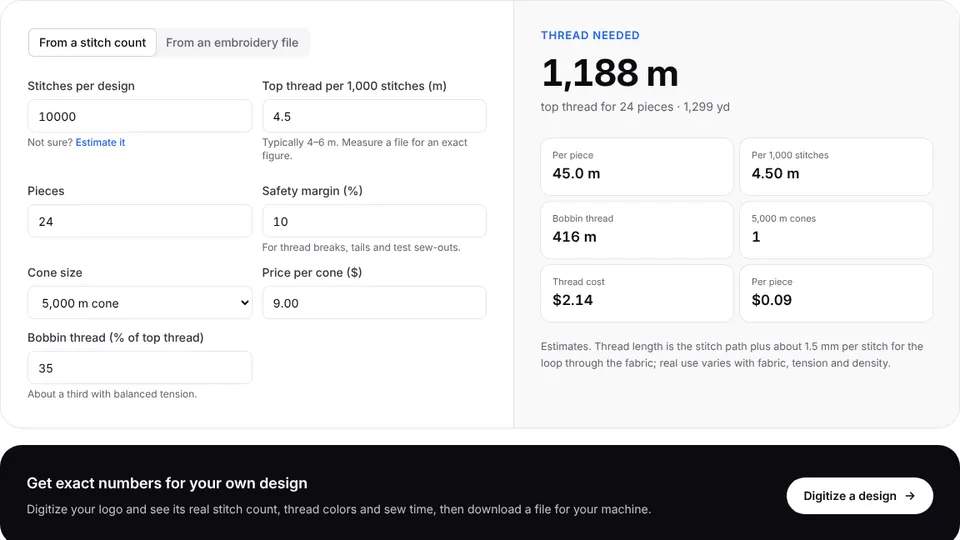
This guide compares the main fibers, explains thread weight, covers bobbins and spool sizes, and shows how to estimate how much thread a design uses. To work it out for a real design, use the embroidery thread calculator.
Polyester, rayon, cotton and metallic compared
| Thread | Look | Strength and washing | Best for |
|---|---|---|---|
| Polyester | Bright, with a good sheen | Strong and colorfast; stands up to hot washes and bleach-based detergents | Workwear, uniforms, towels, kids' items and anything washed often |
| Rayon | The highest sheen; soft and smooth | Slightly weaker; colors can fade with bleach and harsh detergents | Decorative pieces, gifts and items washed gently |
| Cotton | Matte and natural | Weaker, with more lint | Heirloom, quilting and vintage-style designs |
| Metallic | Metallic shine | Breaks and frays more easily | Accents, outlines and small details, not large fills |
Polyester and rayon look almost the same at arm's length, and many shops use polyester for nearly everything because of how it washes. Rayon is still loved for its softness and luster on items that won't be washed hard. Many thread lines come in both fibers, numbered on the same color chart.
For metallic thread, slow the machine down, use a needle with a larger eye made for metallics, and keep it to outlines and small areas. Dense metallic fills are where it breaks most.
40 wt vs 60 wt: what thread weight means
Thread weight is a measure of thickness, and the number runs backwards: the higher the weight, the finer the thread. In the most common system it's roughly how many kilometers of thread make up a kilogram, so 60-weight is finer than 40-weight. Brands don't all measure the same way, so compare numbers within one system.
| Weight | Thickness | Typical use | Needle, typically |
|---|---|---|---|
| 30 wt | Thicker | Bold coverage and a hand-stitched look | A larger needle, often 90/14 |
| 40 wt | Standard | Almost all machine embroidery | 75/11 |
| 60 wt | Finer | Small lettering and fine detail | A smaller needle, often 65/9 or 70/10 |
| Bobbin thread | Finest, often around 60–90 wt | Underneath only | Uses the machine's bobbin |
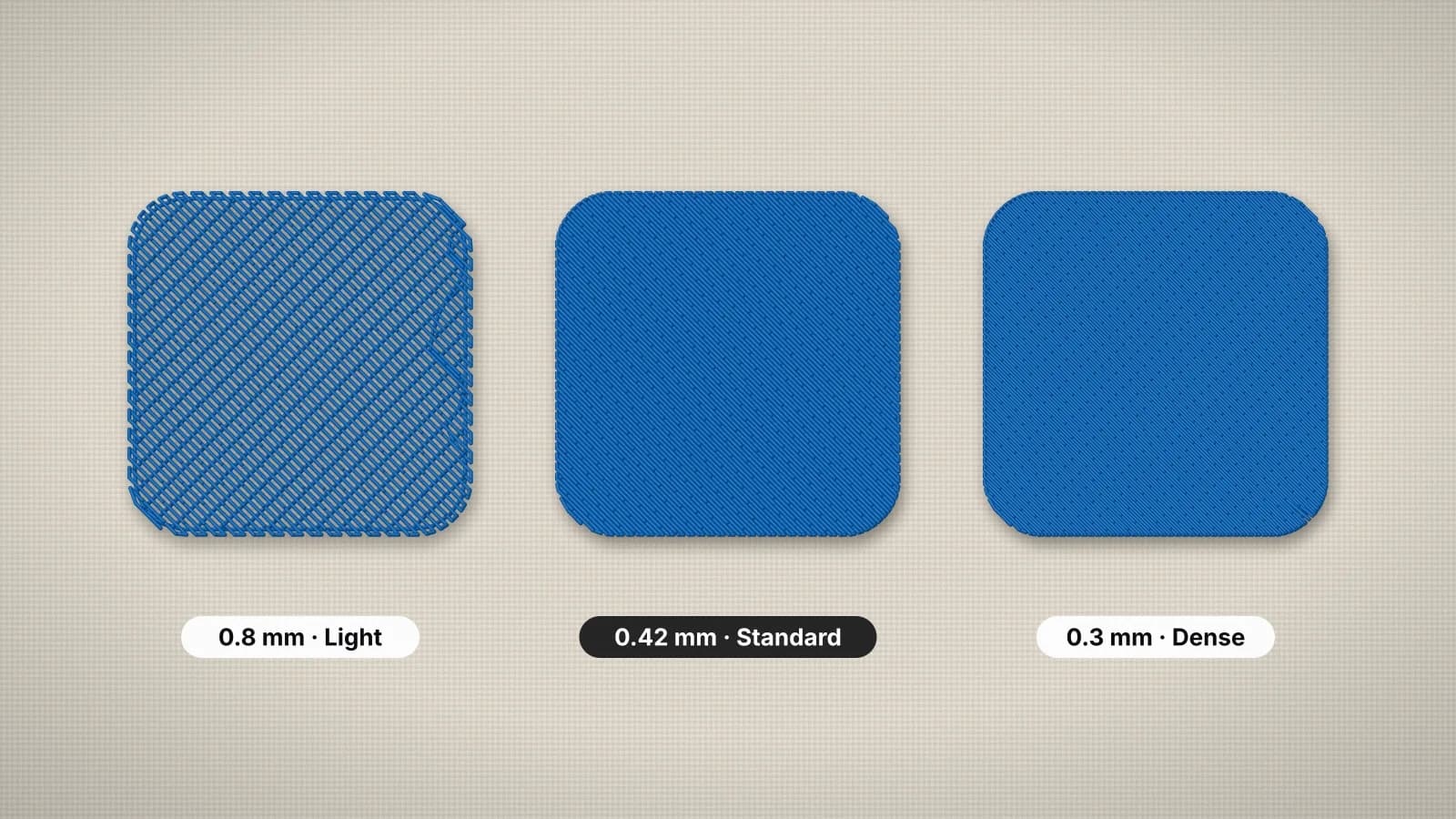
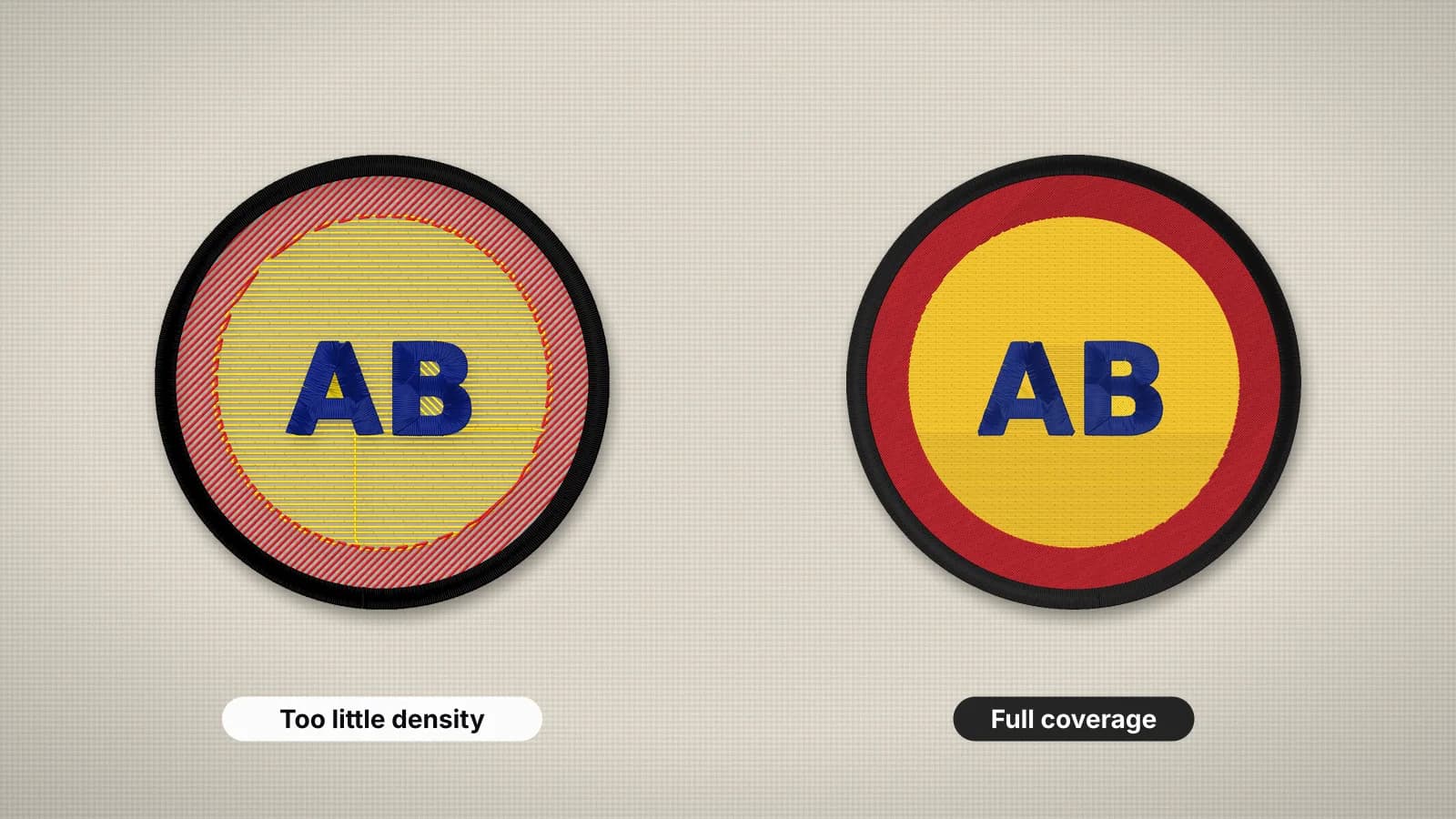
Most files are digitized for 40-weight, and Embrizo's default fill spacing of about 0.4 mm is a typical setting for it. A 40-weight file sewn in 60-weight thread keeps small text crisp, but large fills look thinner and may show fabric, so some digitizers make 60-weight files denser. The density guide explains how spacing and coverage relate.
Try it with your own design
Sign up free, upload an image and get a stitch preview in under a minute.
Drop your image here
PNG, JPG, WebP or SVG · stays on your device
Bobbin thread
Bobbin thread locks each top stitch from underneath. It's finer than top thread, usually white or black, and often polyester or a poly-cotton blend. Finer thread means more of it fits on a bobbin and the back of the design stays flatter.
- Prewound bobbins save time and wind evenly. Check the size your machine takes; common styles include class 15 and L-style.
- Match the bobbin to the back: white under light fabric and backing, black under dark, so it doesn't peek out at the edges of satin columns.
- Check the balance. On the back of a satin column, the bobbin thread should show as a stripe about a third of the column wide. If bobbin thread shows on the front, the top tension is usually too tight or the bobbin too loose.
Spools and cones: sizes and how far they go
Embroidery thread is sold by length. Sizes vary by brand, but these are common:
| Put-up | Typical length | Good for |
|---|---|---|
| Small spool | Often about 250–500 m (270–550 yd) | Accent colors and trying a shade |
| Standard spool | Often about 1,000 m (1,100 yd) | Home machines and everyday colors |
| Cone | Often about 5,000 m (5,500 yd) | Multi-needle machines, core colors and long runs |
| Bobbin thread cone | Often 5,000 m or more | Winding your own bobbins |
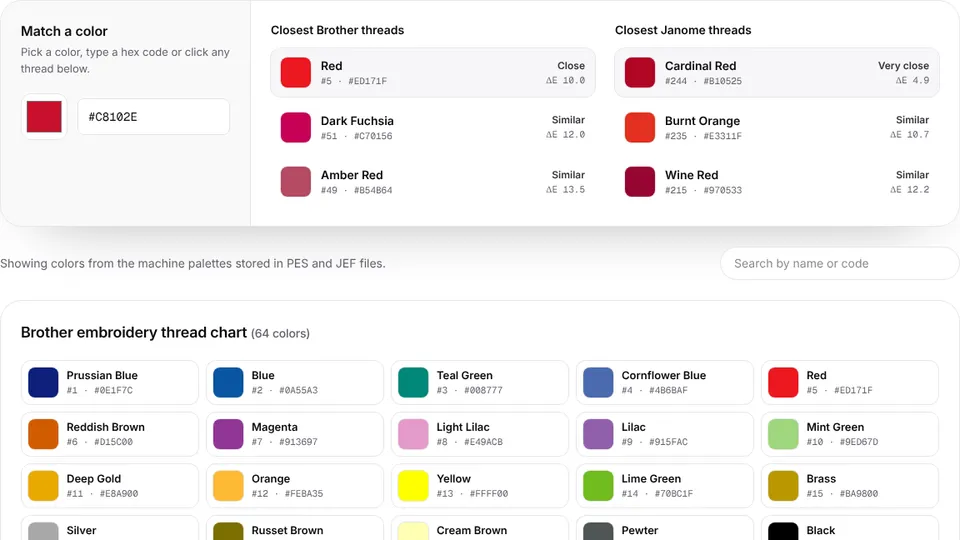
Cones work out cheaper per meter but need a cone holder or thread stand on most home machines. Many embroiderers buy cones of the colors they use most, such as black, white, navy and red, and spools of the rest. The thread color chart lists Brother and Janome codes and matches colors between brands, which helps when you build a starter set. Shops stocking for repeat orders will find more on embroidery businesses.
How much thread a design uses
Thread use follows stitch count. As a rough guide, many embroiderers allow about 4–6 m (4.5–6.5 yd) of top thread per 1,000 stitches, and less bobbin thread, since the bobbin only covers the middle of each stitch on the back. Long satin stitches and thick fabric push it toward the top of that range.
| Design | Stitches | Top thread, roughly |
|---|---|---|
| Name on a towel | 3,000 | 12–18 m |
| Left chest logo | 6,000 | 24–36 m |
| Cap front | 8,000 | 32–48 m |
| Full jacket back | 50,000 | 200–300 m |
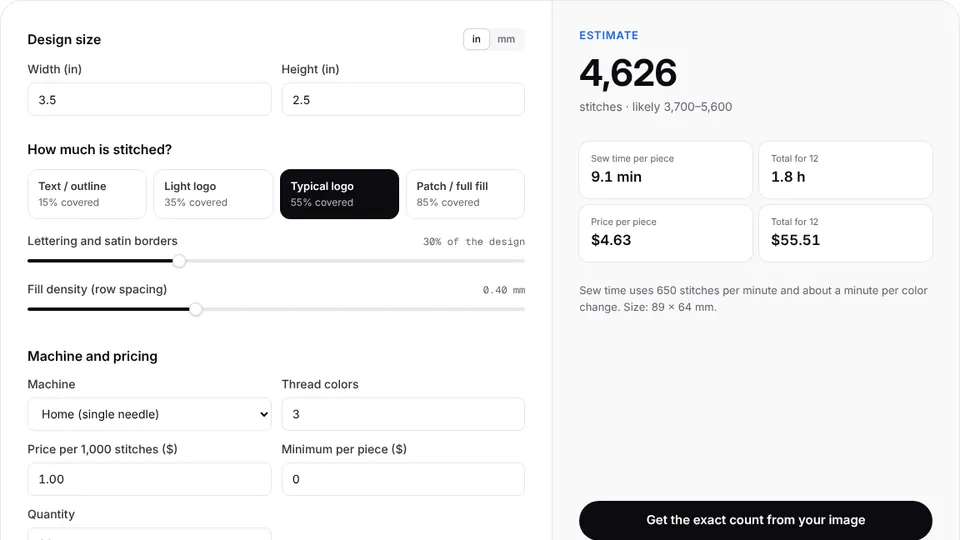
Split that across the colors: the one with the largest filled area takes the most. At those rates, a 1,000 m spool sews roughly 170,000–250,000 stitches. Before the design exists, estimate its stitches with the stitch count calculator and turn them into meters with the thread calculator. Once you have a file, the calculator can read it for a per-color figure, and the digitizer reports the stitch count and sew time of a new design before you download.
Before a large run, make sure you have more than enough of the main color. A spool running out halfway through an order costs more in time than the thread does.
Storing thread so it lasts
- Keep it out of sunlight. UV light fades and weakens thread, rayon and cotton especially. A closed box or drawer beats an open rack in a sunny room.
- Avoid heat and very dry air. Thread that dries out gets brittle and breaks more often.
- Keep dust off. Dust and lint on the spool end up in the tension discs. Cover cones on a thread stand when the machine isn't in use.
- Secure the ends. Tuck the tail into the spool's notch, and use a thread net on slippery or metallic spools so the thread doesn't slide off and tangle.
- Test old thread. Pull a length between your hands. If it snaps easily, keep it for practice pieces.