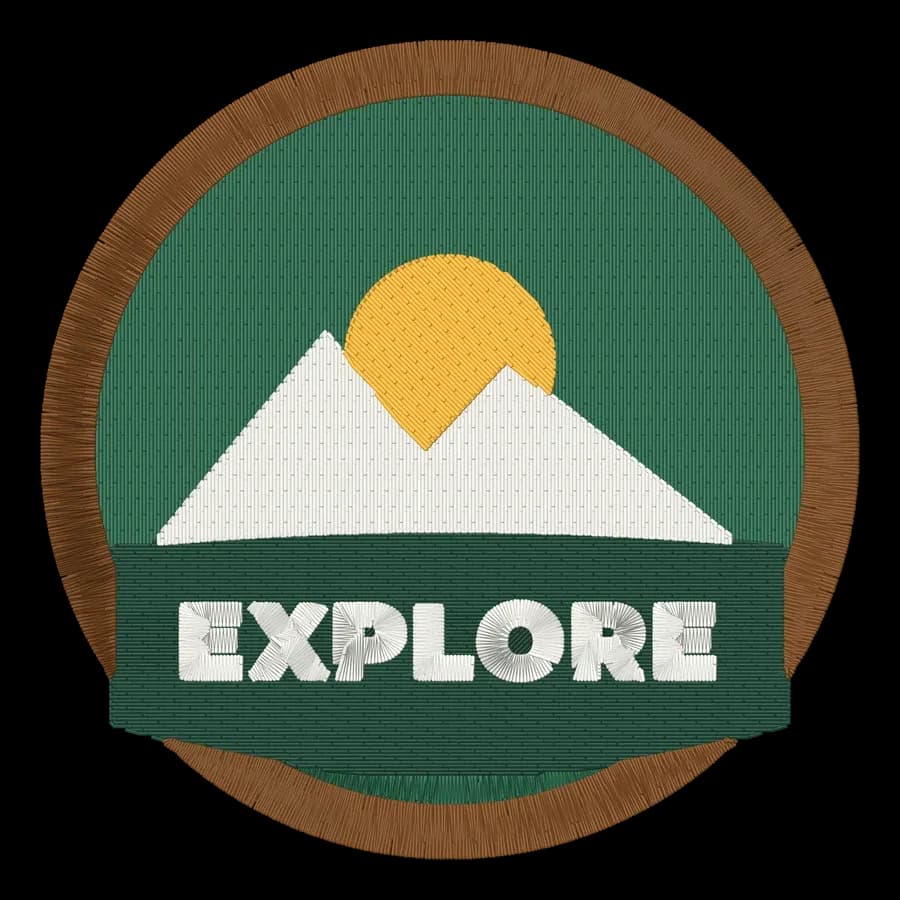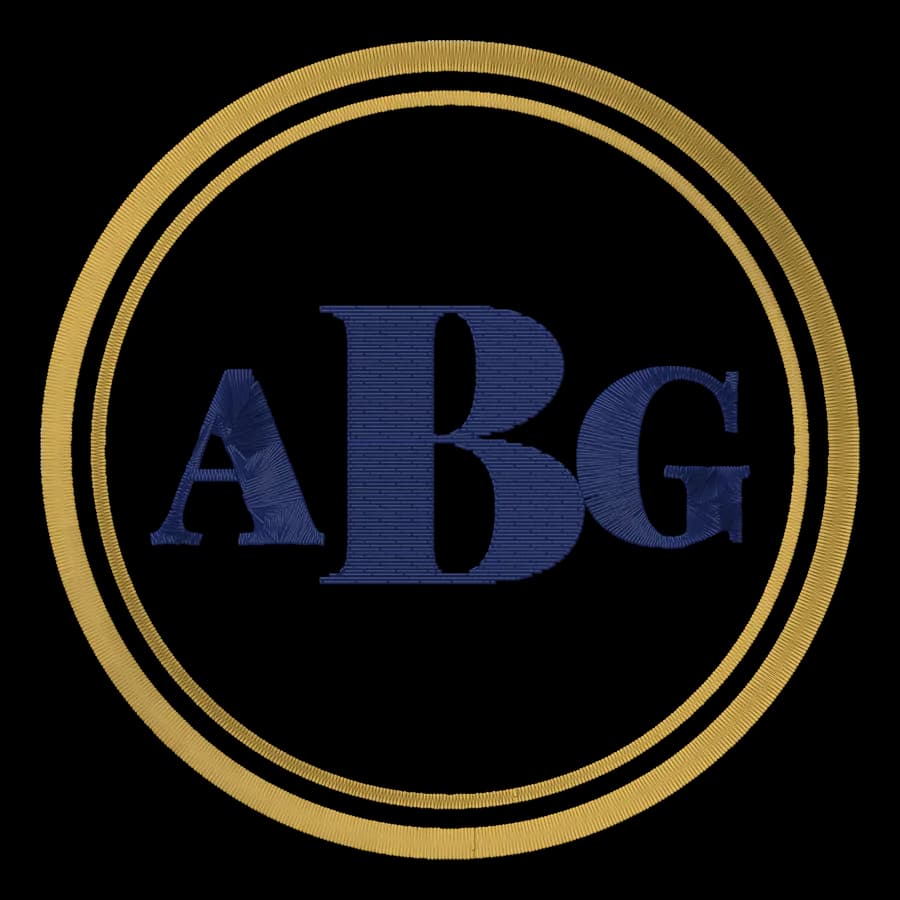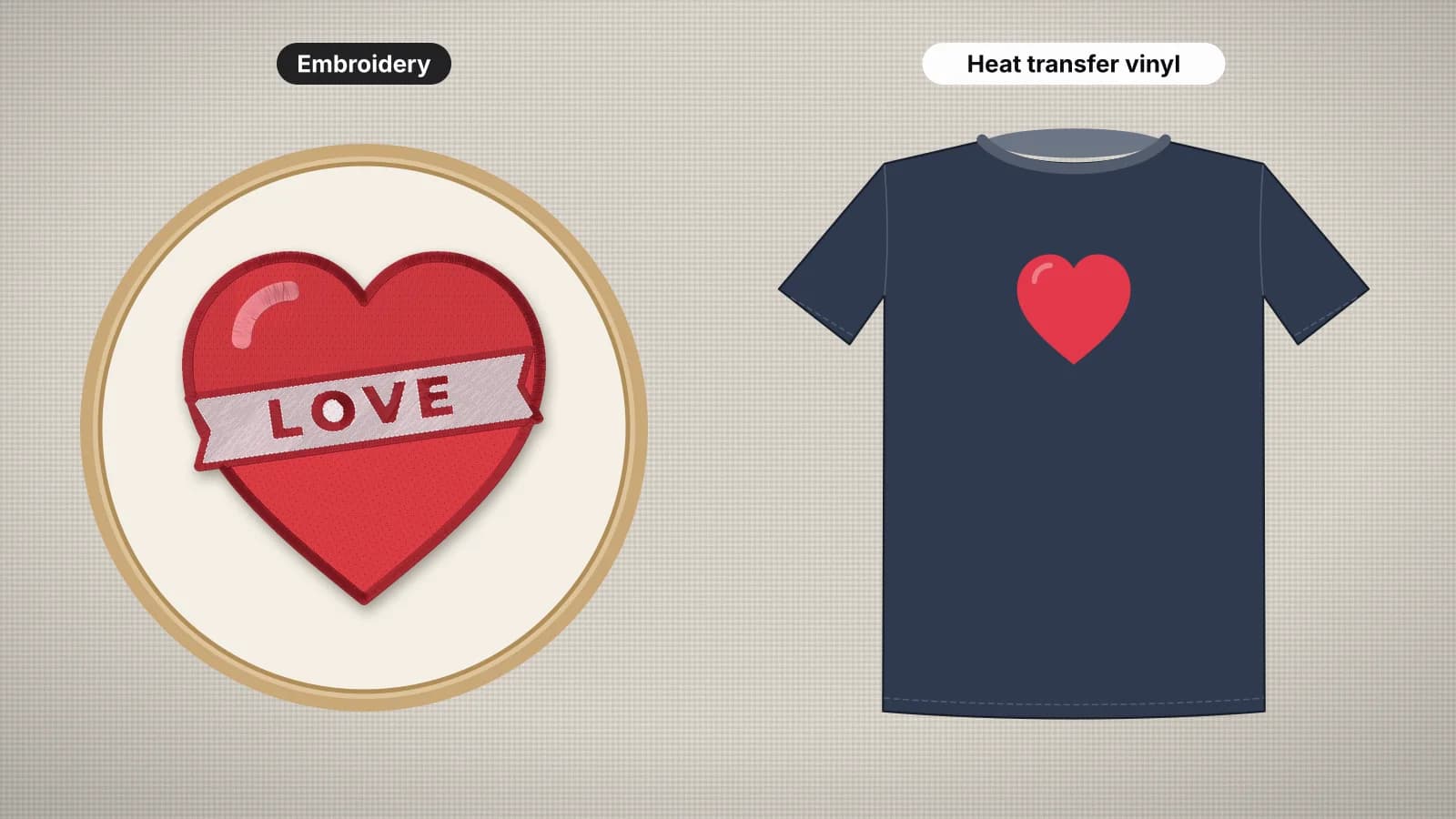
If you already make shirts with a Cricut or a Silhouette, embroidery is a natural next step, and plenty of crafters weigh one against the other before buying a machine or taking an order. Both put a name, a logo or a design on fabric. They get there very differently, and the results look, feel and wash differently.
This guide compares heat transfer vinyl (HTV) and machine embroidery on look, wash durability, cost, effort and the projects each suits. If you have an SVG you already cut vinyl from, you can see how it would stitch by uploading it to the digitizer with a free account.
HTV vs embroidery at a glance
| Factor | Heat transfer vinyl | Machine embroidery |
|---|---|---|
| How it works | Cut from vinyl, weeded, then pressed on with heat | Stitched into the fabric with thread |
| Look | Smooth and flat; matte, glossy, glitter, metallic or holographic | Raised and textured, with the sheen of thread |
| Feel | A layer on top of the fabric; large areas feel stiff and don't breathe | Soft to firm; dense designs add weight |
| Wash durability | Good when pressed well, but edges can lift and vinyl can crack over time | Usually outlasts the item |
| Equipment | A cutting machine, a heat press or iron, vinyl and weeding tools | An embroidery machine, hoops, stabilizer, thread, needles and a design file |
| Time per piece | Cutting, weeding and pressing, with more for each color layer | Hooping and stitching; the machine runs on its own between color changes |
| Best for | Tees, large text, numbers, quick one-offs and specialty finishes | Towels, caps, fleece, baby gifts, monograms and keepsakes |
Look and feel
Vinyl gives crisp, flat graphics with sharp edges, and it does things thread can't: glitter, metallic, holographic and flock finishes, and big solid blocks of color without the weight of stitching. Large designs are easy, though a big panel of vinyl sits on the fabric like a sticker and doesn't breathe.
Embroidery has texture. Satin lettering shines, fills have a woven pattern, and the design becomes part of the fabric rather than sitting on top of it. It reads as handmade and lasting, which is why it's the classic choice for monograms, baby gifts and towels. It favors bold shapes and a few colors; very thin lines and lettering under about 5 mm don't stitch cleanly.
Try it with your own design
Sign up free, upload an image and get a stitch preview in under a minute.
Drop your image here
PNG, JPG, WebP or SVG · stays on your device
Wash durability
- HTV lasts well when it's pressed at the right temperature, time and pressure for that vinyl. Under-pressed edges lift, and after many washes vinyl can crack, especially on stretchy fabric. Washing inside out in cool water and skipping high dryer heat helps it last.
- Embroidery can't peel or crack. Polyester thread stands up to hot washes and bleach-based detergents, and with the right stabilizer the design keeps its shape for the life of the item. Puckering, usually from the wrong backing, is the main thing that spoils it.
- Items washed hot and often, such as kitchen towels, bath towels and bibs, are where embroidery usually pulls ahead.
Follow the vinyl maker's instructions for heat, time, pressure and the first wash; they differ between vinyl types. For embroidery, the stabilizer finder gives the right backing for each fabric.
Cost and equipment
Both crafts start with an investment, at different levels. If you already own a cutting machine, HTV needs little more than a heat press or an iron and rolls of vinyl, and each piece costs the vinyl it uses. Embroidery needs an embroidery machine, usually the bigger purchase, plus stabilizer, thread and needles. Per piece, stabilizer and thread are modest, and the bigger cost is machine time.
- Designs: vinyl needs a cut file, such as an SVG. Embroidery needs a stitch file in your machine's format, digitized from artwork. You can buy designs, use Embrizo's free designs or digitize your own art: digitizing and previewing are free with an account, and downloading files you make needs a plan from $8 a month billed yearly.
- Machine size: an entry 4×4 in machine handles names, monograms and small designs; larger designs need a bigger field. The machine buying guide explains the trade-offs.
- Pricing what you sell: embroidery is often priced by stitch count, and the pricing calculator turns a stitch count into a price per piece.
Effort and time per piece
| Step | HTV | Embroidery |
|---|---|---|
| Prepare the design | Mirror it and send it to the cutter | Digitize it, or open a ready-made stitch file |
| Each extra color | Cut, weed and press another layer, lined up by eye | The machine stops so you can change thread; multi-needle machines change it themselves |
| Small text | Fiddly to weed | Needs letters at least about 5 mm tall |
| On the item | Press each layer with a heat press or iron | Hoop with stabilizer and let the machine stitch: a 7,000-stitch logo takes about 10 minutes at 700 stitches a minute, plus color changes |
| Finishing | Peel the carrier sheet | Trim jump threads and tear or cut away the backing |
HTV is usually quicker for a one-off tee. Embroidery takes longer per piece, but you can step away while it stitches, and repeat orders reuse the same file. The beginner's guide walks through a first sew-out.
Best uses for each
| Project | Usually better | Why |
|---|---|---|
| Team shirts with names and numbers | HTV | Large, crisp lettering on jersey, quick to personalize |
| Glitter, metallic or holographic looks | HTV | Finishes thread can't match |
| Large designs on thin tees | HTV | Lighter than a big area of dense stitching |
| Bath and kitchen towels | Embroidery | Vinyl has little flat surface to bond to on looped terry; stitches with a topping last |
| Caps, beanies and fleece | Embroidery | Texture and curves suit thread |
| Baby blankets, bibs and keepsakes | Embroidery | Soft, washable and made to last |
| Monograms on linens | Embroidery | The traditional look, and it survives hot washes |
Many crafters do both: vinyl for quick shirts and event orders, embroidery for gifts and items that get washed hard. The embroidery vs screen printing guide compares stitching with the other common way to decorate merch.
Turning your vinyl designs into embroidery
Cut files don't stitch as they are, but they're often a good starting point: an SVG is clean, flat-colored artwork, which is what digitizing needs. A few things change on the way:
- Thicken thin lines to at least about 1 mm wide at the final size, so they can stitch as satin.
- Enlarge small text to at least about 5 mm tall in a bold font, or about 10 mm in a script.
- Drop distressed textures and tiny cut-outs, which turn into scattered stitches.
- Keep a few solid colors, each of which becomes a thread.
Then upload the SVG, PNG or JPG to the digitizer, set the size and fabric, and check the stitch preview. The embroidery image checker flags lines and details that are too fine before you start, and the SVG to PES page covers Brother files.