Embroidery is one of the hardest-wearing ways to decorate clothing, but it still wears faster in a rough wash. Hot water, bleach, a hot dryer and an iron on the front all take their toll: stitches fuzz and lose their shine, colors fade, and cotton can shrink round a design until it puckers.
This guide covers washing, drying and ironing embroidered clothes, leftover stabilizer, threads that fade or bleed, caps, and the care notes to give customers. For towels, see how to embroider towels, which has its own washing section.
Washing embroidered clothes
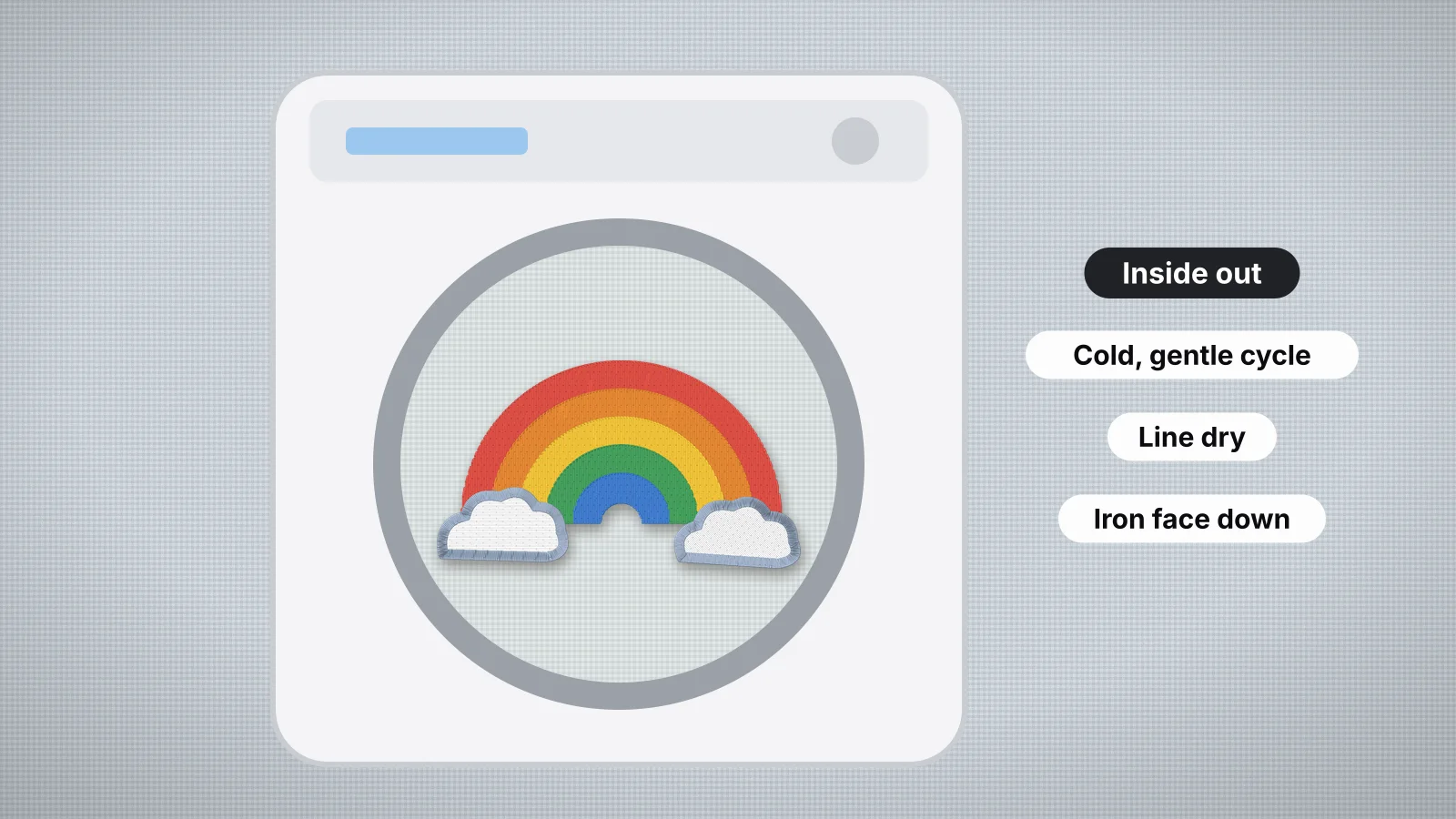
- Turn it inside out, so the embroidery rubs against the inside of the garment rather than the drum and other clothes.
- Close zippers and hook-and-loop tabs, and wash with similar fabrics. Zips and hook-and-loop catch on stitches and pull loops out.
- Choose a gentle or delicate cycle in cold or warm water. Cold is safest for dark and bright threads; warm is fine for most polyester thread on everyday cotton.
- Use a mild detergent and no chlorine bleach. Rayon thread in particular can fade or weaken with bleach; polyester thread is generally more resistant.
- Put small or delicate pieces in a mesh laundry bag, such as baby clothes, handkerchiefs and anything with metallic thread.
- Treat stains by dabbing, not scrubbing. A brush scrubbed across the stitches fuzzes them.
Check the garment's care label first. The embroidery can usually take whatever the fabric can, so a delicate fabric or metallic thread sets the limit for the whole piece.
Drying
| Method | Good for | Watch for |
|---|---|---|
| Tumble dry low | Everyday T-shirts, sweatshirts and hoodies with polyester thread | High heat shrinks cotton round the design and can pucker it |
| Line dry | Most embroidered clothes; the gentlest option | Dry dark colors in the shade to slow fading |
| Dry flat | Knits, sweaters and anything that stretches out of shape | Smooth the embroidered area flat while it's damp |
| Air dry on a form | Caps and structured hats | Shape the crown over a bowl or a rolled towel |
Take clothes out while they're still slightly damp if you can. A design dried hard in a hot dryer is more likely to pucker, especially on cotton that wasn't prewashed before it was stitched. If one has puckered, how to fix embroidery puckering explains the causes and what helps.
Try it with your own design
Sign up free, upload an image and get a stitch preview in under a minute.
Drop your image here
PNG, JPG, WebP or SVG · stays on your device
Ironing without flattening the stitches
- Lay a thick, fluffy towel on the ironing board.
- Put the garment on it face down, with the embroidery sinking into the towel.
- Iron the back of the design at the fabric's usual setting, or use steam and a pressing cloth on delicate fabric.
- Iron the rest of the garment as usual, keeping the iron off the front of the stitches.
The towel lets the stitches keep their raised texture while the fabric round them gets pressed flat. Ironing the front directly can flatten satin, leave a shiny mark and damage metallic thread.
Don't iron over leftover wash-away stabilizer: heat can melt or harden it into the stitches. Rinse it out first.
Leftover stabilizer
| Stabilizer | After stitching | In the wash |
|---|---|---|
| Wash-away (water-soluble) | Tear off the excess, then rinse or soak in warm water until the stiffness is gone | Any left in feels stiff or tacky until it's fully rinsed out |
| Tear-away | Tear it away close to the stitches | Small bits trapped under the stitches soften over a few washes |
| Cut-away | Trim it about 1/4 in (6 mm) from the stitches; it stays for good | It keeps supporting the design wash after wash, which is the point |
| Fusible cover backing | Ironed over the back so the stitches don't scratch | Can lift at the edges; press it back with a cloth |
If a design feels stiff after its first wash, there's usually wash-away left in it. Soak it again in warm water for a few minutes and rinse. The water-soluble stabilizer and cut-away stabilizer entries explain each type.
Threads that fade, bleed or fuzz
| Problem | Likely cause | What to do |
|---|---|---|
| Colors fading | Hot water, bleach, strong sun, or rayon thread on items washed often | Wash cold, skip bleach, dry in the shade, and use polyester thread for workwear and kids' clothes |
| Color bleeding into the fabric | A dark or red thread or fabric releasing dye, more likely in hot water | Rewash straight away in cold water before drying; heat can set the stain |
| Fuzzy, dull stitches | Rubbing against other clothes, zips and the drum | Wash inside out, in a mesh bag, with similar fabrics |
| Loops pulled out | A snag on a zip, a hook-and-loop tab or jewelry | Ease the loop to the back with a hand-sewing needle rather than cutting it |
| Puckering after washing | The fabric shrinking round the design | Steam it from the back; prewash fabric before stitching next time |
Bleeding can come from the garment's dye or the thread's. Polyester embroidery thread is generally colorfast, but if you're not sure about a new garment with a red or navy design on white, wash it on its own in cold water the first time, or add a color catcher sheet. The thread guide compares polyester, rayon and cotton.
Caring for embroidered caps
- Spot clean first. Dab marks with a cloth and a little mild detergent in cool water, working round the embroidery rather than across it.
- Hand wash structured caps rather than machine washing them. Soak briefly in cool water with mild detergent, brush the fabric gently, just dab the embroidery, and rinse.
- Don't soak an older cap or one you're unsure about. Some older caps have cardboard in the brim, which warps and breaks down in water; spot clean those.
- Never tumble dry a cap. Shape the crown over a bowl, a ball or a rolled towel and let it air dry away from direct heat.
- Unstructured caps and beanies are softer and more forgiving; a gentle hand wash and drying flat or on a form suits most of them.
Raised puff lettering on caps sits over foam, so avoid crushing it or ironing it. For more on caps themselves, see the hat embroidery guide.
Practice on a free design
114 ready-to-sew designs in every machine format, free with an account.


Care notes for customers, and designs that last
If you sell or give embroidered clothes, a short care card heads off most problems. Something like:
- Wash inside out on a gentle cycle, cold or warm.
- No chlorine bleach.
- Tumble dry low or line dry.
- Iron on the reverse, face down on a towel; don't iron the embroidery.
- Caps: spot clean or hand wash, and air dry.
How a design is made also decides how it wears. Polyester thread, cut-away backing on knits and satin stitches no longer than about 7 mm all hold up better in the wash. In the digitizer, satin stitches longer than 7 mm are split automatically, and the Knit and Stretch presets add more pull compensation and heavier underlay than the Woven preset, which helps a design on a T-shirt keep its shape. Digitizing and previewing are free with an account; downloading the file needs a paid plan.