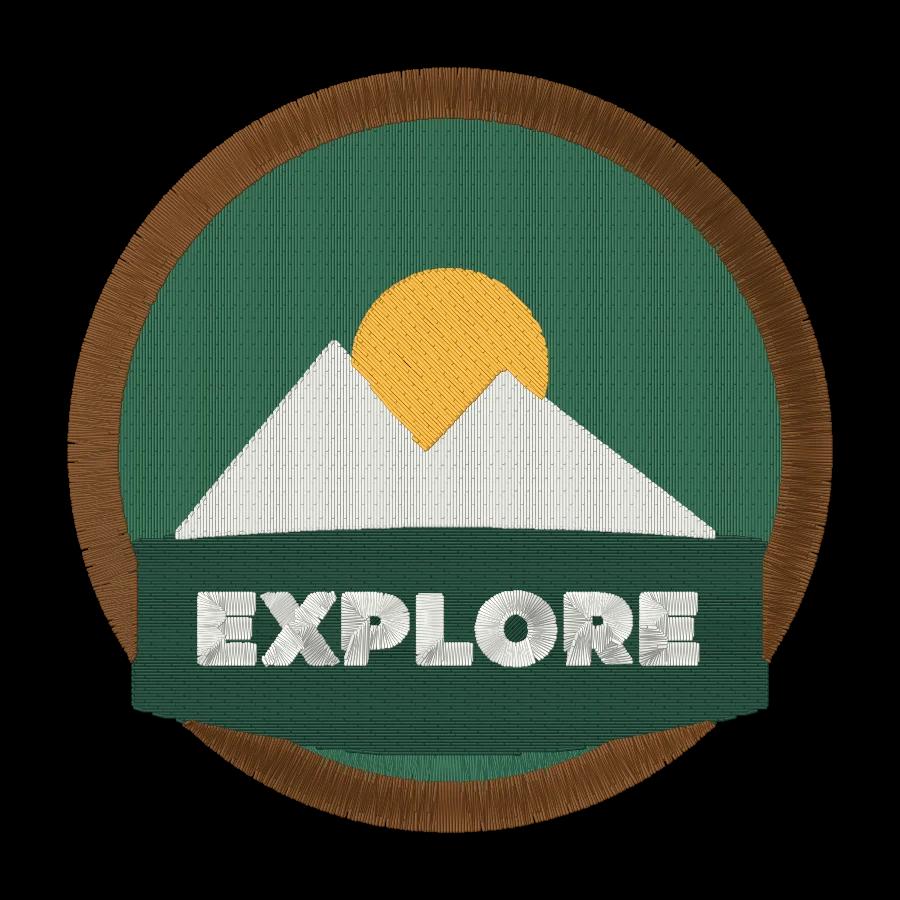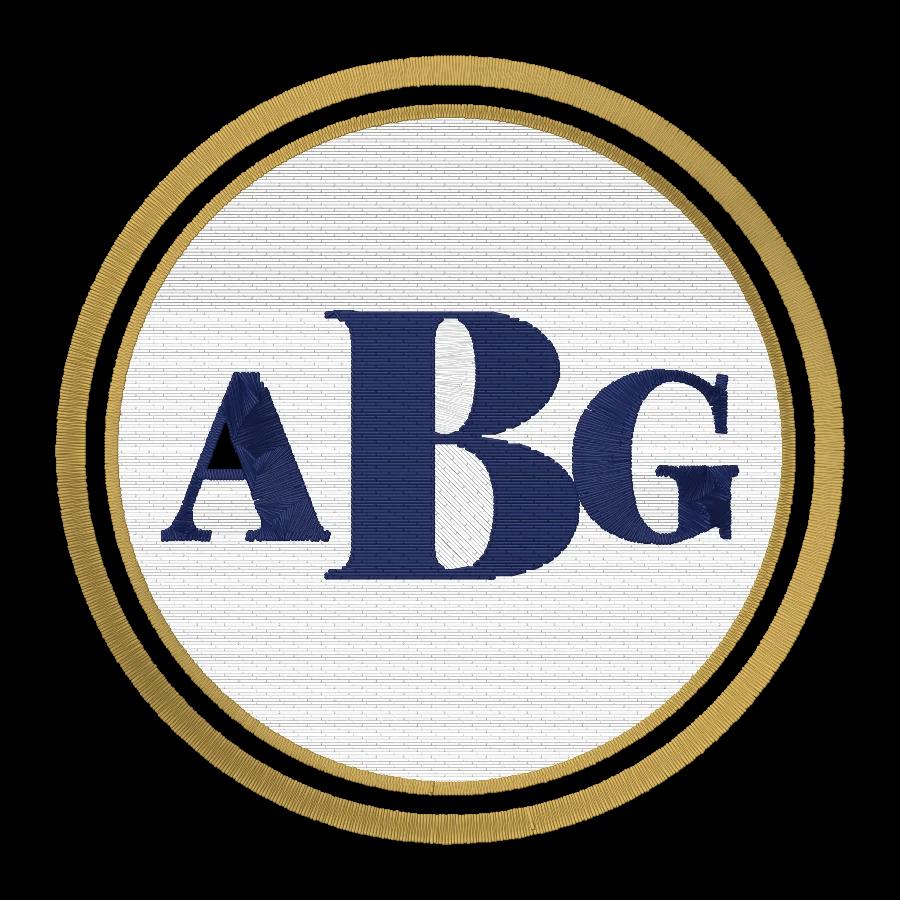
 Free previewBatch name embroideryPaste a list of names and digitize each one in the same font, height and thread, with width checks.Open the tool
Name patches are the small ovals and rectangles with a person's name on mechanics' shirts, uniforms, chef coats, coveralls and work jackets. A patch can move from a worn-out shirt to a new one, and a whole crew's set can be stitched in an afternoon.
This guide covers shapes and sizes, fonts and letter heights, borders and fabric, backings and attaching, when to stitch names straight onto the shirt instead, what name patches cost, and making many names at once. For names sewn directly onto fabric, see how to embroider names.
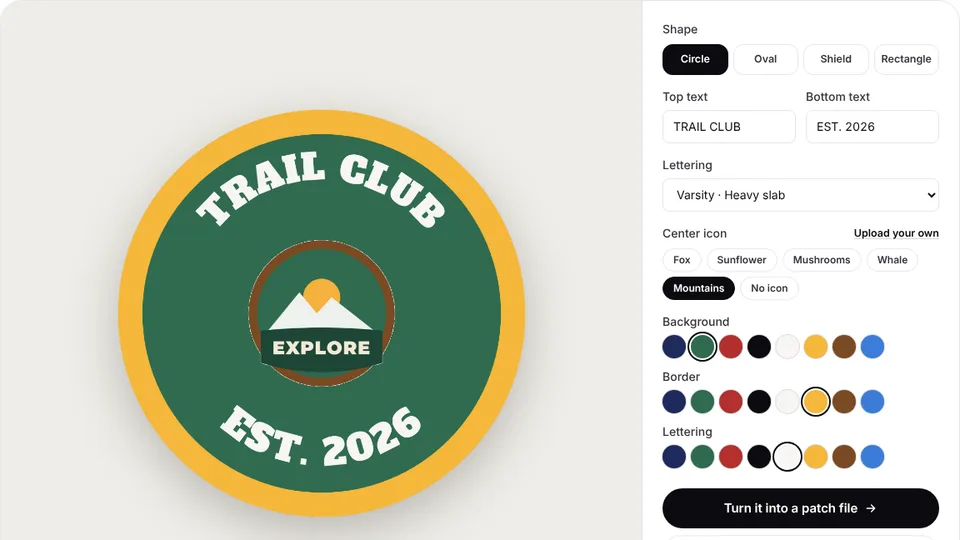
 Free design makerWork shirt name embroidery design makerType the name, pick lettering and an icon, and see it sized for the item. Then turn it into a file for your machine.Make yours
What size are embroidered name patches?
Most work-shirt name patches are ovals about 3–4 in (75–100 mm) wide and 1.5–2 in (38–50 mm) tall, or rectangles about 3.5–4 in wide and 1–2 in tall. There's no single standard and patch makers' sizes vary, so match the patch to the space on the shirt and the length of the names.
| Style | Typical size | Used on | Fits |
|---|---|---|---|
| Classic oval | 3.5 × 2 in (89 × 51 mm) | Mechanic, service and bowling shirts | First names in script |
| Small oval | 3 × 1.5 in (75 × 38 mm) | Aprons, kids' clothes and small chests | Short names |
| Large oval | 4 × 2–2.5 in (100 × 50–65 mm) | Jackets and coveralls | A name and a title on two lines |
| Rectangle | 3.5 × 1 in to 4 × 2 in (89 × 25 to 100 × 50 mm) | Uniforms, lab coats and chef coats | Full names and longer names |
| Name tape | 1 × 5 in (25 × 127 mm), usually hook-backed | Tactical vests, plate carriers and bags | Last names in capitals |
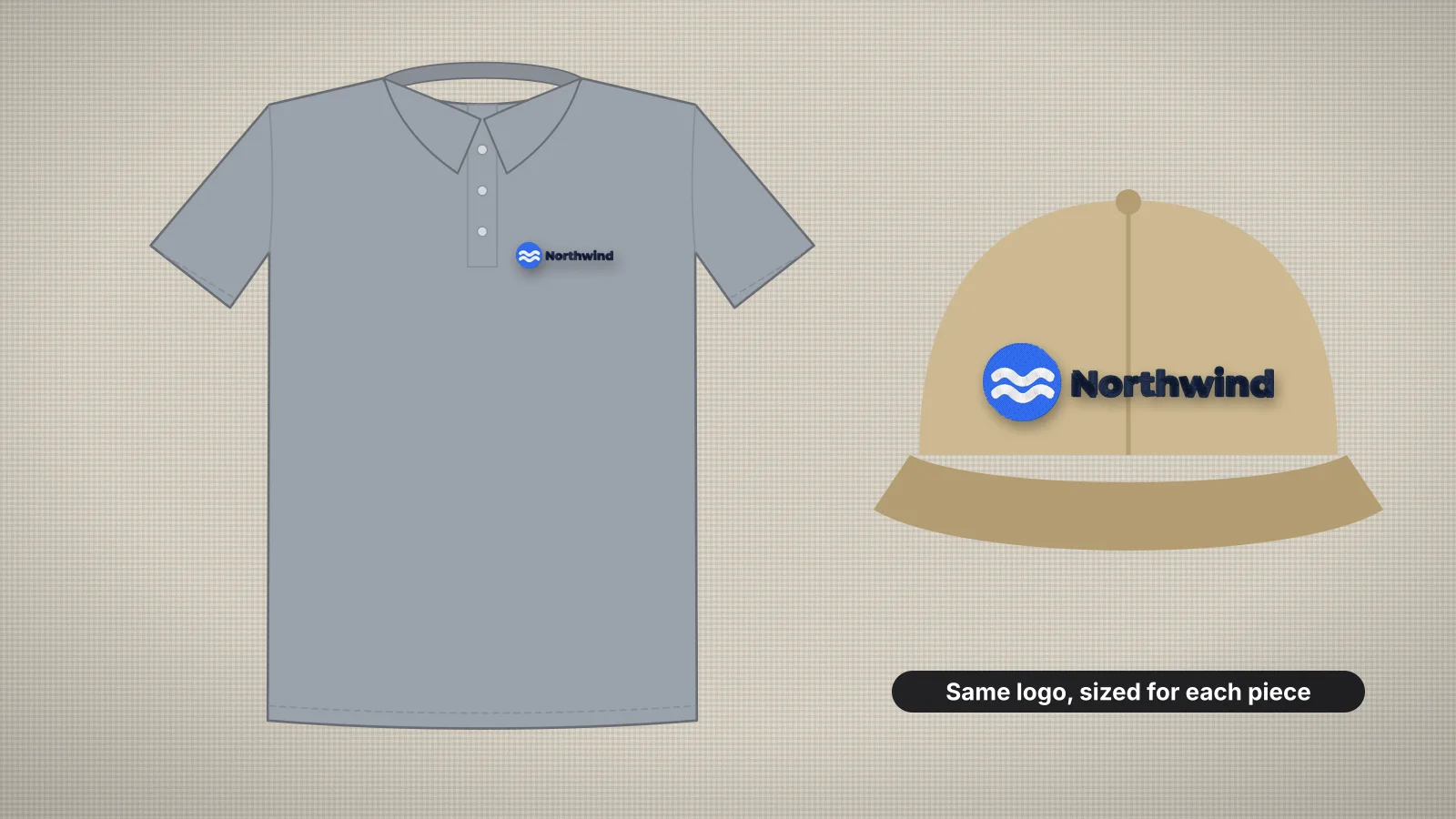
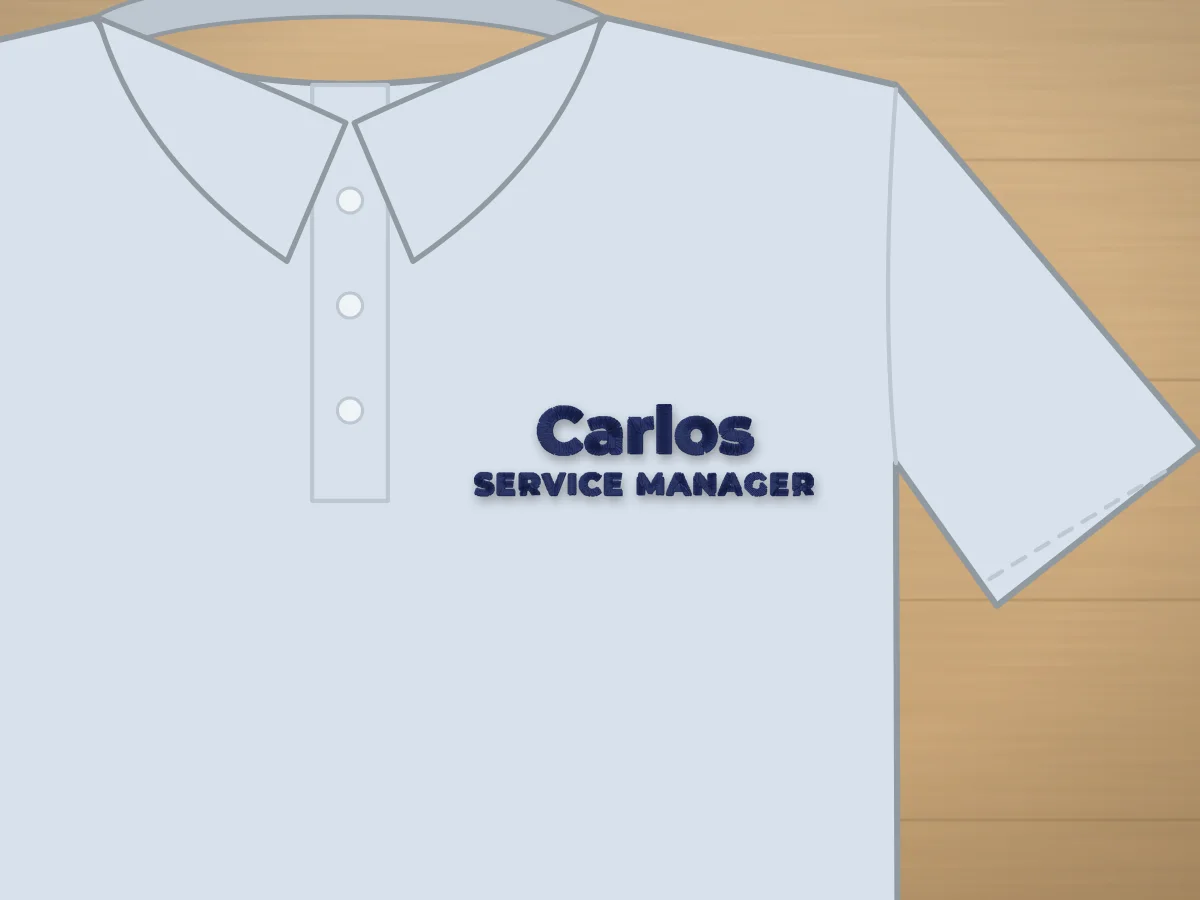
The patch usually goes on the chest opposite the company logo, at the same height, or centered above a pocket. The right chest size page shows the area, and lining the top of the patch up with the logo makes the pair look planned.
Which font and letter height should a name patch have?
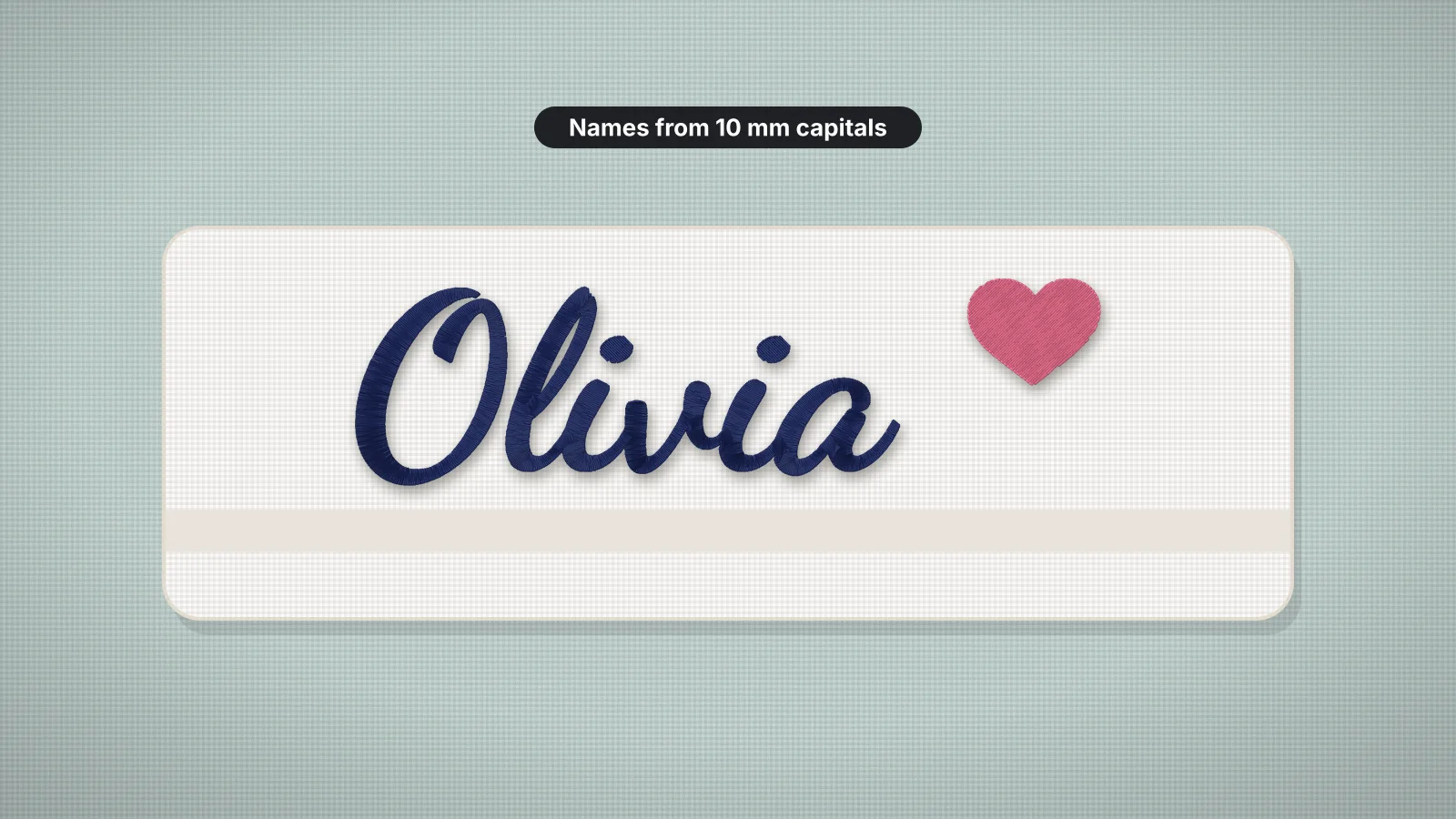
Use a bold script for the classic workwear look, with letters about 10–15 mm (0.4–0.6 in) tall, or bold block capitals about 8–13 mm tall for longer names and easy reading across a room. Thin scripts and serif fonts lose their joins and serifs at patch sizes.
| Font | Look | Smallest capitals | Best for |
|---|---|---|---|
| Retro | Bold, connected script | 10 mm | The vintage mechanic and garage look |
| Script | Rounded script | 10 mm | Friendly names on aprons and café uniforms |
| Brush | Slanted brush script | 10 mm | Sporty, hand-lettered styles |
| Block | Bold sans-serif | 5 mm | Uniforms, medical and security staff |
| Sport | Condensed sans-serif | 5 mm | Long names that need to fit |
| Tall | Condensed capitals | 6 mm | Last names on 1 × 5 in name tapes |
Measure the space inside the border, not the whole patch. With a 3 mm satin border, a 3.5 × 2 in oval leaves a centered area of about 54 × 27 mm, and a 3.5 × 1 in rectangle about 77 × 13 mm. Long names go to a condensed font, a rectangle or a nickname. The lettering size calculator shows how tall a name comes out at a given width, per font.
Try it with your own design
Sign up free, upload an image and get a stitch preview in under a minute.
Drop your image here
PNG, JPG, SVG, PDF or AI · stays on your device
Not sure what to expect? See real examples or how it works.
What border and fabric should a name patch have?
Most name patches are twill with a satin or merrowed border about 3 mm wide and the name stitched on top, with the twill itself showing as the background. A fully stitched background looks richer but takes about twice the stitches and makes a stiffer patch.
- Twill. Polyester twill seals cleanly with a hot knife; cotton twill needs seam sealant. White, light gray, khaki or the shirt color are the classic choices.
- Border. Commercial patches usually have a merrowed edge, a thick overlocked border sewn on a merrow machine after cutting, which suits ovals and rectangles. On an embroidery machine, a satin border about 2.5–4 mm wide does the same job and is the line you cut along. The merrow border entry explains the difference.
- Thread colors. Two colors are typical, one for the border and one for the name, and often they're the same. Match the company's brand color or the shirt's trim.
- Stabilizer. A firm cut-away or heavy tear-away under the twill keeps the patch flat after it's cut.
- Blank emblems. You can also buy blank twill emblems with a merrowed edge already on, float them on sticky stabilizer and stitch only the name.
A 3.5 × 2 in twill patch with a border and a first name comes to roughly 2,000–3,000 stitches, about 3–5 minutes of sewing. How to make an embroidered patch covers cutting, sealing and backing in detail.
How do you attach name patches to work shirts?
Sew name patches on for work shirts that are washed hot or laundered industrially. A heat-seal backing is quicker and fine for lighter wear, and hook and loop suits vests and jackets where the name changes. Pressing first and then sewing around the edge gives the most secure result.
| Backing | How to attach | Durability | Best for |
|---|---|---|---|
| Sew-on (no backing) | A straight stitch or narrow zigzag just inside the border, in thread that matches it | Best; lasts as long as the shirt | Uniforms, coveralls and anything washed hot |
| Heat-seal | A heat press, or a dry iron with firm pressure, at the backing maker's settings | Good for home washing; can lift in hot or industrial laundering | Retail shirts, aprons and light-duty wear |
| Heat-seal, then sewn | Press it to place it, then sew around the edge | Best, and the easiest to line up | Most work shirts |
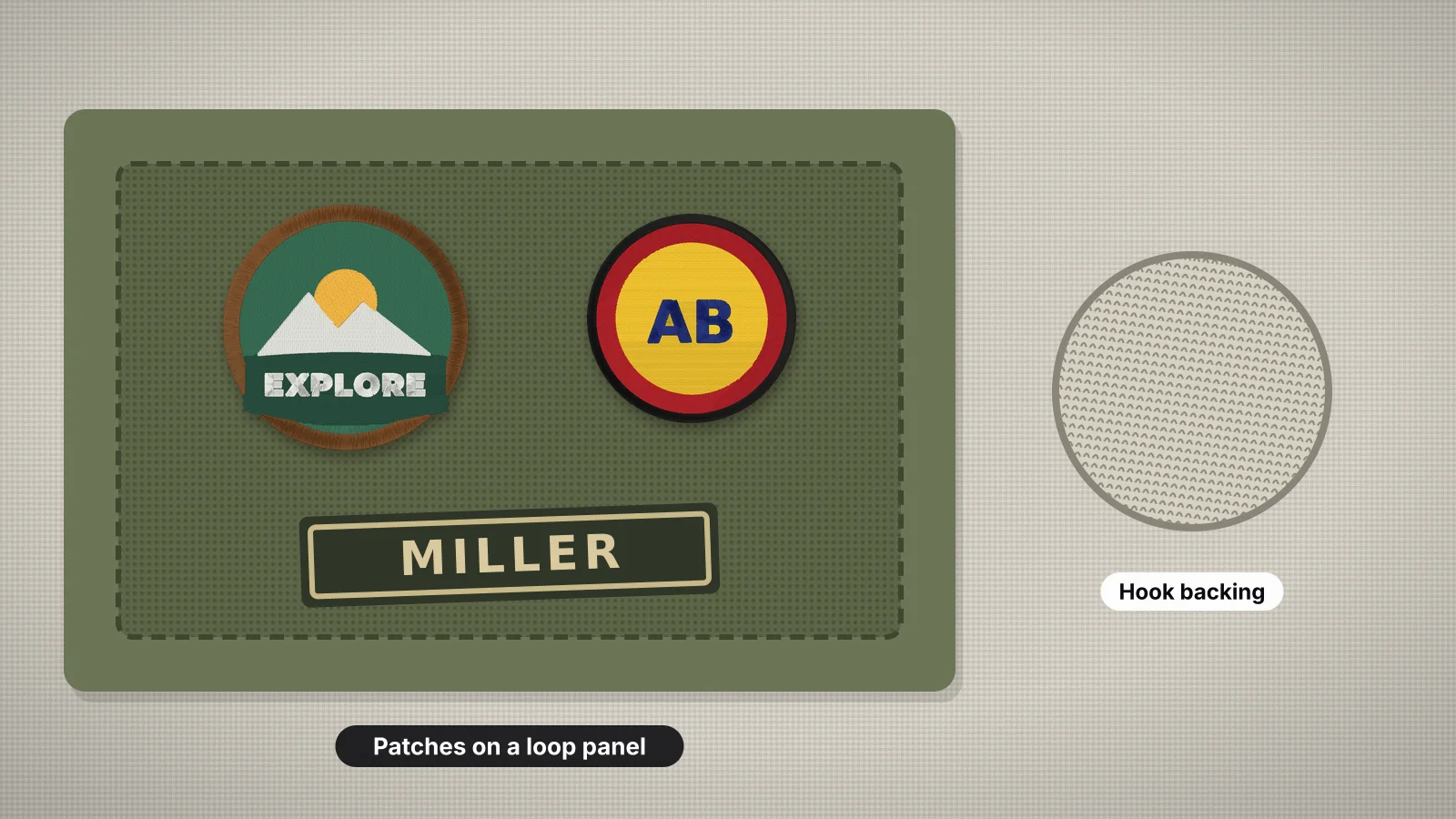
| Hook and loop | Hook side on the patch, loop side sewn to the garment | Swappable; the loop collects lint | Tactical vests, first responders and shared jackets |
| Peel-and-stick | Pressure-sensitive adhesive | Temporary | Events and trade shows |
Check the garment before you press. Heat that sets the adhesive can shine, shrink or melt nylon shells, rain jackets and some performance fabrics, so sew those, or test on a hidden spot first.
Place every patch the same way. A printed placement template or a ruler measured from the shoulder seam keeps a crew's patches at the same height on every shirt.
Should you embroider names directly or use name patches?
Stitch names straight onto the shirt when it belongs to one person for its whole life. Use patches when shirts are shared, rented or replaced often, when staff changes, or when the garment is hard to hoop.
| Question | Name stitched on the shirt | Name patch |
|---|---|---|
| Look | Flat and clean | Raised, classic workwear |
| Staff changes | The shirt keeps the name | Unpick or peel it off and add a new one |
| Coveralls, heavy jackets and vests | Awkward to hoop | Easy: stitch flat, then attach |
| Batching | One hooping per garment | Many patches per hooping, attached later |
| Durability | As long as the garment | Sewn patches last; heat-seal alone can lift |
| Typical cost per shirt | A stitching charge, often about $6 for a name | The patch, plus attaching |
Uniform programs often use emblems for exactly these reasons. For the logo that goes alongside the name, see how to embroider a company logo on workwear, and for names stitched straight onto medical wear, how to embroider scrubs.
How much do embroidered name patches cost?
Custom name patches typically cost about $8–$13 each in runs of around 10 from patch shops, about $6–$8 for a single name patch from Etsy sellers, and around $2 each for simple patches at 100 or more. Setup is spread across the run, so small orders cost more per patch.
To price your own, start from the stitching. On the embroidery price chart model, a name costs about $6 at one piece and $5.10 at 48, and a border doesn't change that, because a patch this size stays under the 6,000 stitches the $6 minimum covers. Add twill, stabilizer and backing, usually well under $1 a patch, a few minutes of cutting and sealing, and a separate charge if you sew the patches onto the shirts. The pricing calculator handles quantity breaks, and the quote generator prints a quote for the customer.
Practice on a free design
167 ready-to-sew designs in every machine format, free with an account.
How do you make name patches for a whole crew?
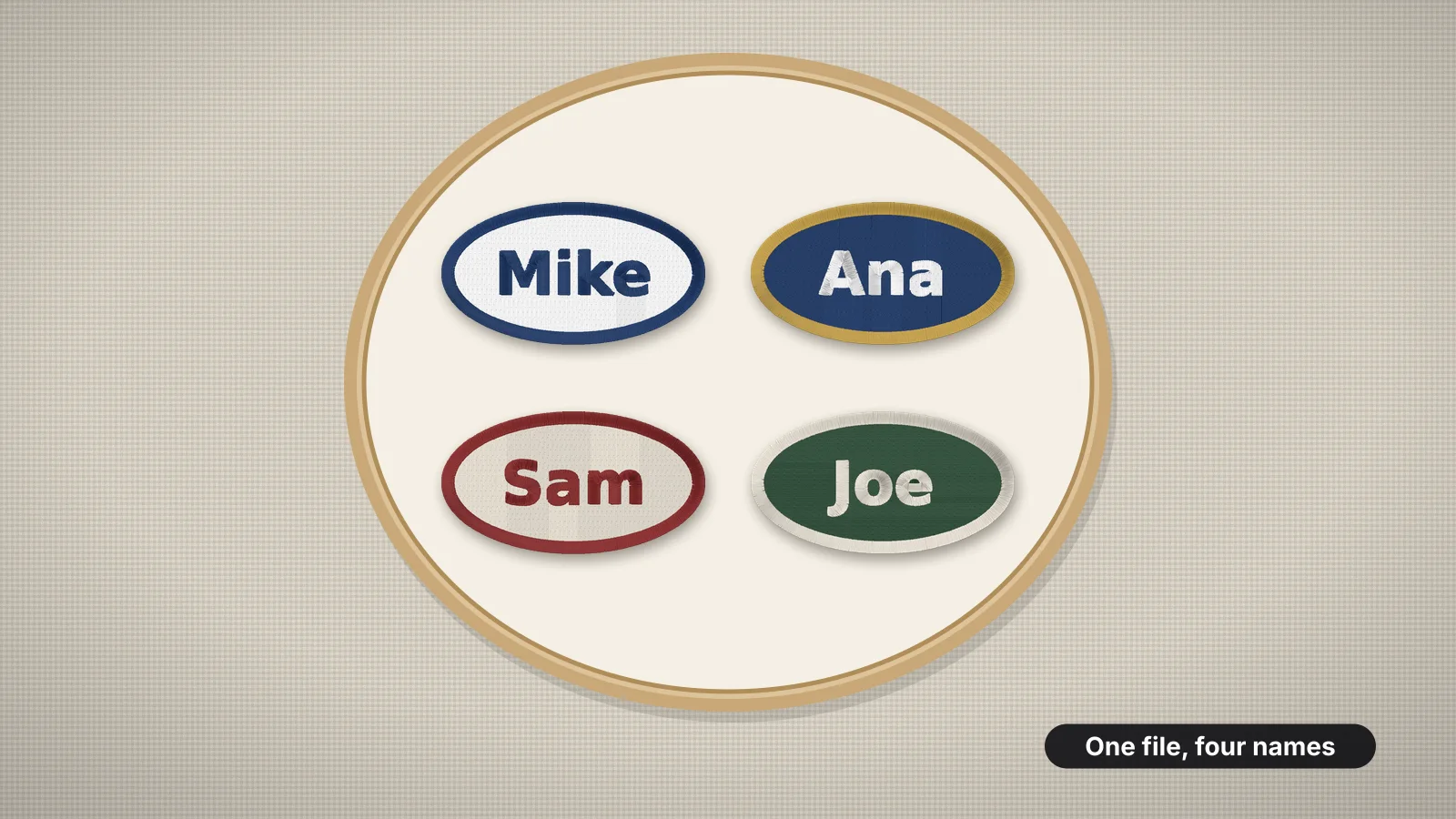
Digitize every name in the same font, height and thread with a batch tool, add the border, then stitch several copies of each name per hooping. Most workers get several shirts, so one hooping often covers one person's whole set.
- Collect the names exactly as they should read, one per line, with spelling, nicknames and capitals checked by the customer. An order sheet with the number of shirts per person saves a reprint.
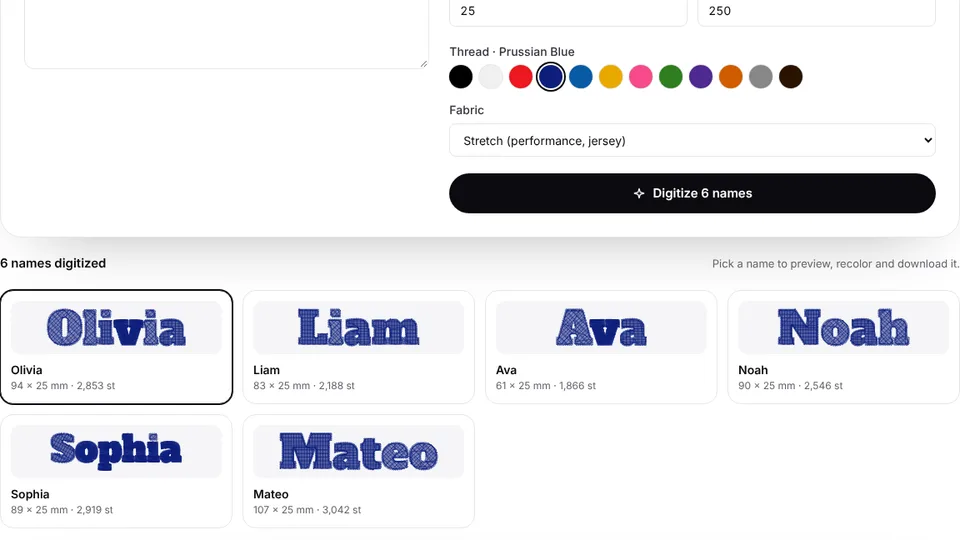
- Digitize them together. Paste up to 30 names into batch name embroidery, pick the font, height, thread color and fabric, and set the maximum width to the space inside your patch, such as 54 mm for a 3.5 × 2 in oval. It digitizes each name and flags any that run wider. For a single name with more lettering options, use text to embroidery.
- Add the border. Drop each saved name file into the embroidery frame maker, choose an oval, or the rounded square set to the patch's width and height, with a satin border, and it centers the name inside and tells you whether it fits. For a fully stitched patch with a background and a second line, such as a job title, the patch designer puts the name and title on a rectangle in straight lines, or arches them on an oval.
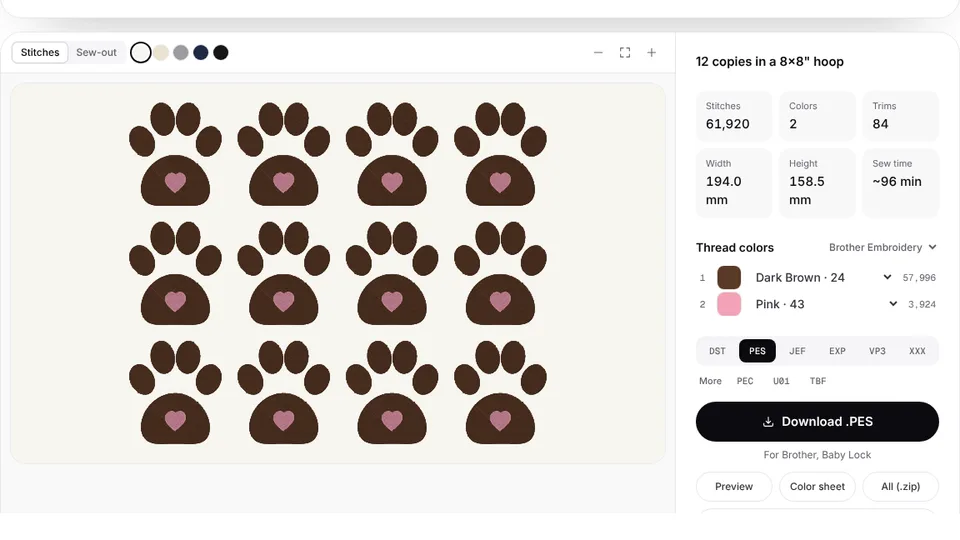
- Fill the hoop. The hoop layout tool repeats one patch across a hoop, sewn color by color. With 8 mm gaps, a 3.5 × 2 in oval fits 3 times in a 5 × 7 in hoop, 6 times in an 8 × 8 and 10 times in an 8 × 12. It copies one design, so make one layout per name; to pair two different names in one hooping, join them with the design combiner.
- Stitch, cut and finish the batch on twill over firm stabilizer, then seal the edges and add the backing.
What Embrizo doesn't do: it doesn't sew merrowed edges or apply backings, and it doesn't fill one hoop with a whole crew of different names in one step. Embroidering multiple items in one hoop covers spacing and cutting. Digitizing and previews are free with an account; downloading files needs a plan. Files come in DST, PES, JEF, EXP, VP3, XXX, PEC, U01 and TBF, so they suit any machine, and logos for the same shirts go through the digitizer.