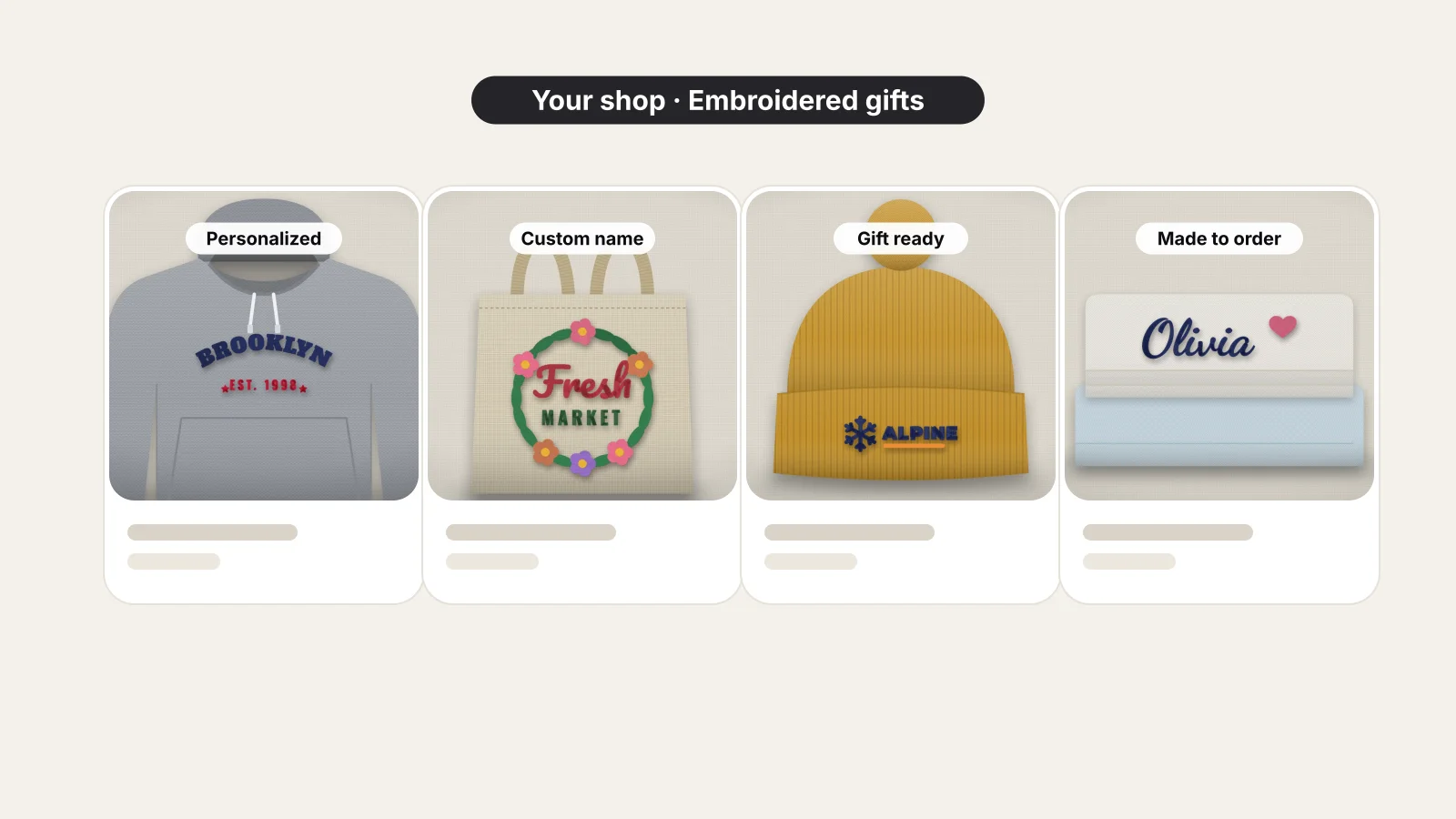
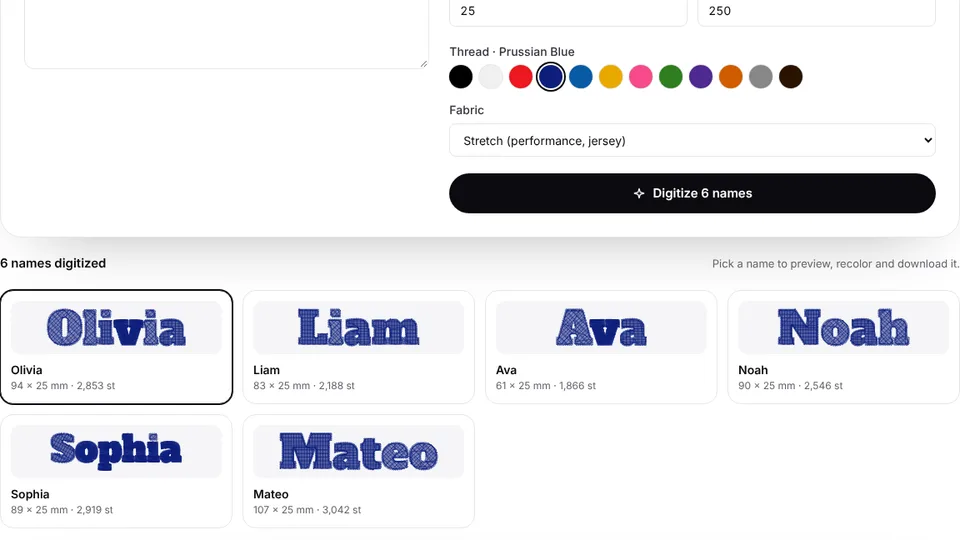
 Free previewBatch name embroideryPaste a list of names and digitize each one in the same font, height and thread, with width checks.Open the tool
Personalized items are where a home embroidery machine earns its keep: a name turns a plain stocking or towel into a gift that can't be bought off the shelf, and buyers come back each time the family grows. The stitching is rarely the hard part. The time goes into messages, typos, proofs and rethreading, and the money goes on remaking items stitched with the wrong name.
This guide is for home and small-shop embroiderers selling name items such as stockings, blankets, towels, hats and teacher totes. It covers picking products, listings, checking names, proofs, batching, pricing, turnaround and the Christmas rush, mistakes and returns, and photos. If you're new to selling online, start with how to sell embroidery on Etsy.
Which personalized embroidery products sell best for a small shop?
The best products are name items people buy again every year that take one hooping, one or two thread colors and less than about 10 minutes on the machine. These five cover most of the calendar:
| Product | Name size, about | Setup | Main season |
|---|---|---|---|
| Christmas stockings | Capitals 25–40 mm (1–1.5 in) on the cuff | Stitch the cuff flat before it's sewn on, or float a finished cuff on sticky backing; a topping on velvet, knit and faux fur | October to mid-December |
| Baby and kids' blankets | A name 1.5–2 in (40–50 mm) tall, or a corner monogram 3–4 in | Topping and cut-away on fleece and minky, a 75/11 ballpoint, the weight supported | All year: births, showers, Christmas |
| Towels | 2–4 in (50–100 mm) on bath towels, 1.5–2 in on hand towels | Water-soluble topping always, medium tear-away, 75/11 or 80/12 sharp | Weddings, housewarmings, Christmas |
| Hats and caps | Block letters at least 6–7 mm, up to about 2–2.25 in tall on a structured front | Cap backing on a cap frame, 75/11 or 80/12 sharp | All year, with family and team orders |
| Teacher totes | A name 1–1.5 in (25–40 mm) tall under an apple or pencil | Medium tear-away, 80/12 or 90/14 sharp, front panel hooped alone | End of the school year, back to school, Christmas |
Before you list a product, check that you can restock the blank, hoop it the same way every time, fit a long name and ship it without crushing. Test-stitch each blank, wash one, and time a whole order from the first message to the sealed parcel.
Fewer products sell better than many. A shop known for name stockings and baby blankets is easier to photograph, price and batch than one that offers a bit of everything.
How do you set up a listing with a personalization field?
Use the personalization box only for the text that changes, and drop-down options for everything else: font, thread color, size and blank color. On Etsy, a listing's personalization box lets you write instructions for the buyer, set a character limit and make the field required or optional; most other shop platforms offer a similar text field, built in or through an app. The fewer choices typed by hand, the fewer mistakes:
- Write instructions with an example: "Type the name exactly as you want it stitched, with capitals and spaces. Example: Emma Rose."
- Set the character limit from your longest test name, not the platform's maximum, and say what happens to longer names.
- Number the fonts and thread colors in one chart image, so buyers choose "Font 2, Thread 14" from the drop-downs.
- One name per item. For a family set of stockings, sell by quantity and ask for the names in order, one per line.
- Ask for the date they need it on gift items, and show your processing time on the listing.
A rough rule for the limit: in a rounded script, each letter of a mixed-case name takes about three-quarters of the capital height in width, and in a bold block font about the full capital height. A 9-letter script name with 25 mm capitals runs about 170 mm (6.7 in). Measure your own fonts with the lettering size calculator, then set limits along these lines:
| Product | Space for the name, about | Name height | Limit, about |
|---|---|---|---|
| Stocking cuff | 6 in (150 mm) | Script capitals 25 mm | 8 letters, or 10 with long names dropped to 20 mm |
| Baby blanket in a 6×10 hoop | 10 in (250 mm) | Script capitals 40 mm (1.5 in) | 8 letters |
| Bath towel border | 9 in (230 mm) | Script capitals 40 mm | 7–8 letters |
| Cap front | 4.5 in (115 mm) | Block capitals 15 mm (0.6 in) | 7 letters |
| Teacher tote | 7 in (175 mm) | Script capitals 30 mm | 8 letters |
Try it with your own design
Sign up free, upload an image and get a stitch preview in under a minute.
Drop your image here
PNG, JPG, SVG, PDF or AI · stays on your device
Not sure what to expect? See real examples or how it works.
How do you collect names and check the spelling?
Copy every name exactly as the buyer typed it, never retype it, and check it again before it goes into the file. Most personalization mistakes are copying mistakes, not stitching ones. A routine that catches them:
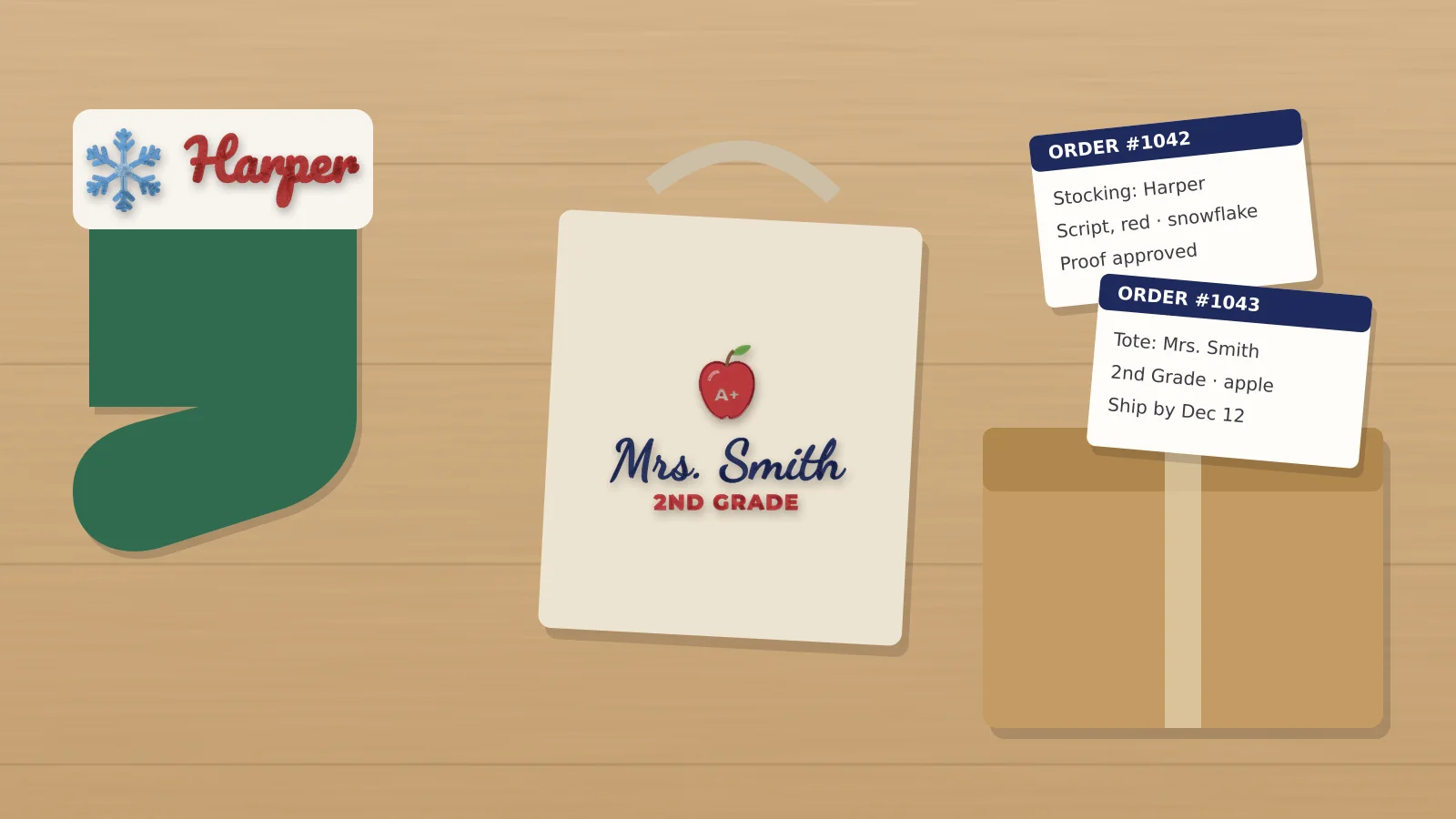
- Paste each order into a spreadsheet, one row per item: order number, name, font, thread color, item, blank color, size and ship-by date.
- Read each name back letter by letter against the order, watching for capitals (McKenzie, DeShawn), apostrophes (O'Neill), hyphens and spaces (Mary-Kate, Anna Sofia), accents (Zoë, José) and doubled letters.
- Don't correct unusual spellings. Jaxon, Kaitlyn and Aubree are deliberate. If something looks like a typo, such as Micheal for Michael or a name typed all in lowercase, message the buyer and quote exactly what they typed.
- Check your font has every character, including accents, ampersands and apostrophes, and ask before you substitute anything.
- Paste the names into the design, not retyped, and compare the finished layout with the spreadsheet once more before you hoop.
Print an order slip with the name in the buyer's own spelling and let it travel with the blank through stitching and packing. Whoever packs the parcel checks the stitched name against the slip one last time.
Should you send a proof for personalized embroidery?
Send a proof whenever the layout isn't fixed: custom wording, two or more lines, a date, a choice of icon, or a wedding, birth or memorial piece. For a single name in a fixed font and size, many shops skip the proof and stitch exactly what was typed, and say so on the listing. A proof should show:
- The stitched design rather than typed text, in the chosen font and thread colors
- The size in inches and millimeters, and the item and placement
- The name and every other line exactly as they'll be stitched
- A clear question: "Reply yes to approve, or tell me what to change. I'll stitch only after your yes."
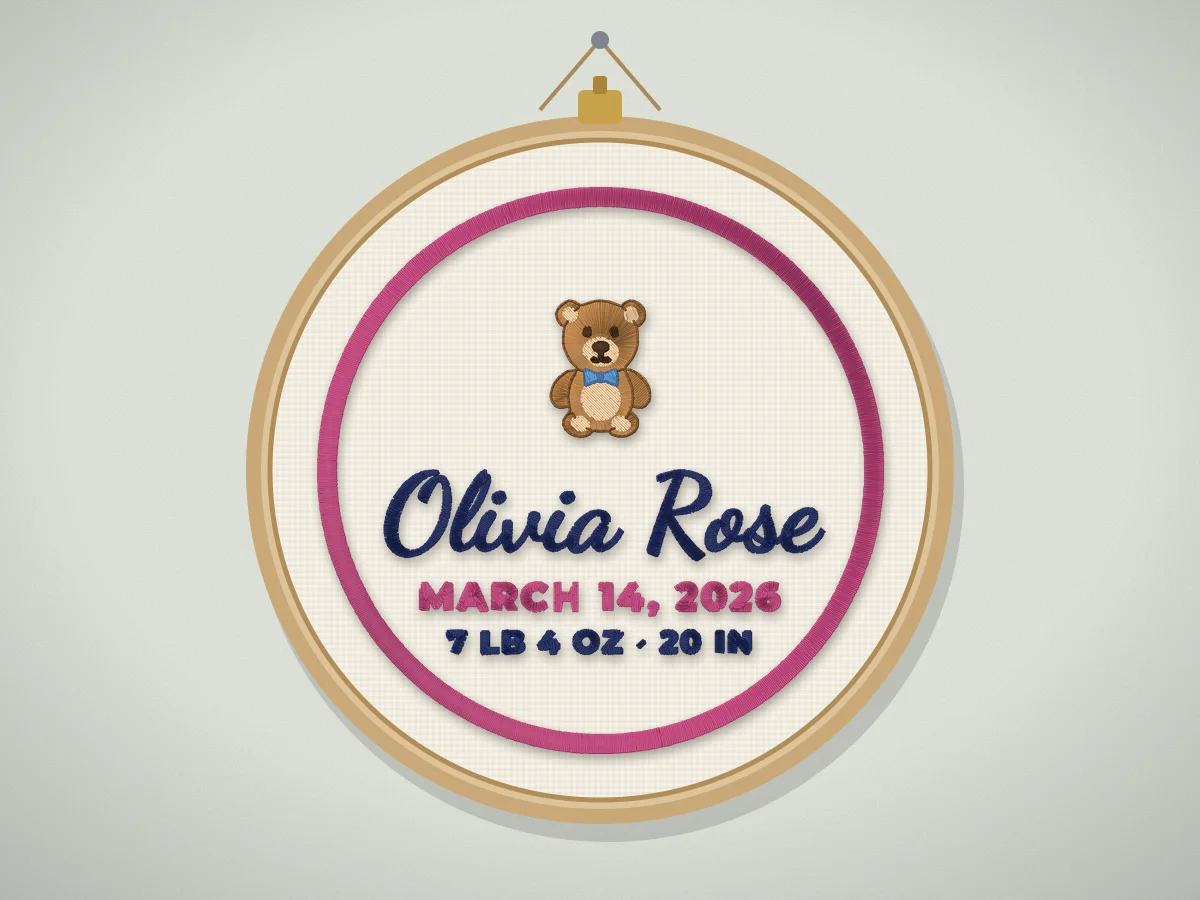
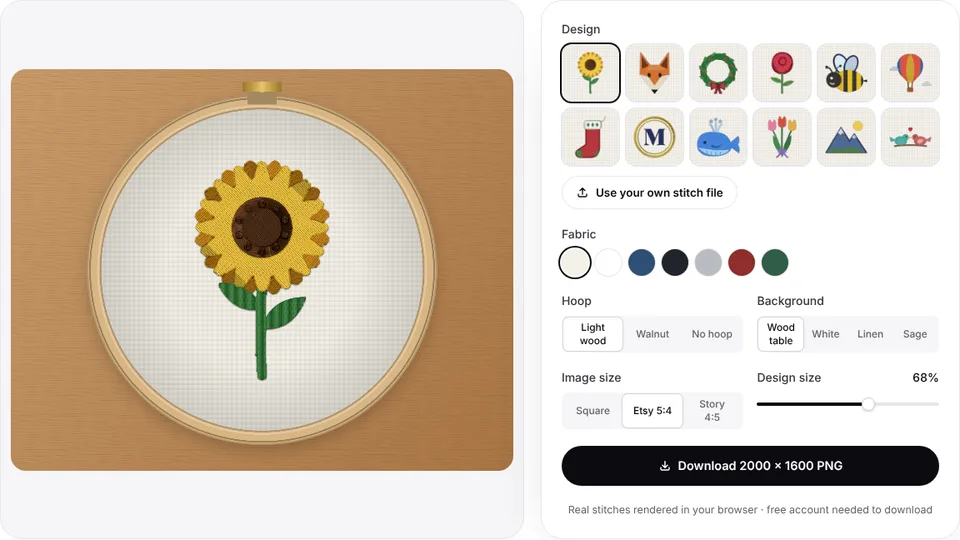
Embrizo's personalized embroidery design maker shows the layout as soon as you type a name or date and pick a lettering style, an icon from the free designs and a size, then turns it into a stitch file in the digitizer, whose stitch preview makes a realistic proof image. Occasion templates such as Christmas stocking names and teacher names start from layouts for those items. Digitizing and previewing are free with an account; downloading files needs a paid plan. Keep to one or two proof rounds, and charge for changes after approval.
How do you batch personalized orders by thread color and hoop?
Sort the day's orders by product and hoop first, then by thread color, then by font, so you change hoops and thread as few times as possible. On a single-needle machine each thread change costs about a minute, and switching hoops or frames costs more.
- Group by product and hoop: all the stockings in the 5×7, then the blankets in the 6×10, then the caps on the cap frame.
- Within each group, sort by thread color, then by font. Twenty one-color names in four thread colors need 3 thread changes instead of up to 19.
- Digitize the group at once. Batch name embroidery takes up to 30 names per batch, pasted one per line from the spreadsheet, digitizes each in the same font, height and thread, and flags any name wider than your limit.
- Stitch the longest name first, as a check on width and placement before the rest.
- Gang small items, such as ornaments or labels, several to a hoop and sewn color by color.
- Keep each order slip with its piece from hooping to packing.
| Batch | Items | Hoop | Thread changes |
|---|---|---|---|
| Red-cuff stockings | 8 names in white | 5×7 | None, with white already threaded |
| White-cuff stockings | 6 names in red, then 4 in green | 5×7 | 2 |
| Baby blankets | 5 names in pink, then 3 in blue | 6×10 | 2 |
| The day | 26 pieces | 2 hoops | 4 changes; in order-number order, up to 25 |
How should you price personalized embroidery?
Price each listing per item, built from the blank, materials, your time, packaging and the platform's fees, with the first line of personalization included and a charge for each extra line, name or icon. A worked example for a name stocking, with example numbers to swap for your own:
| Cost | Example | Amount |
|---|---|---|
| Blank stocking | A velvet stocking with an embroidery opening, plus a share of the spares | $9.00 |
| Thread, backing and topping | One name on the cuff | $0.50 |
| Your time | Checking the order, hooping, stitching, trimming and packing: 20 minutes at $25 an hour | $8.33 |
| Packaging | Mailer, tissue and a care card | $1.50 |
| Total cost | Before fees and profit | $19.33 |
| Price | $19.33 ÷ (1 − 15% fee allowance − 20% profit) | About $30 |
The 15% fee allowance is a placeholder, not any platform's rate. Etsy charges a listing fee, a transaction fee on the item price and shipping, and payment processing, plus advertising fees where they apply; look up the current rates for your country and use your own figure. Then price the extras from the time they add:
- An extra line, such as a date or "Baby's First Christmas", adds stitching, a proof and another chance of a typo: price the added minutes at your hourly rate and round up.
- An extra placement, such as a name on the cuff and a year on the foot, needs its own hooping, so price it as a second piece of stitching.
- Icons from a menu, such as a paw, a snowflake or an apple, add stitches and often a color change: a flat charge per icon.
- Sets in one font and color batch together, so a small discount per extra item still pays.
- Rush orders jump the queue: charge for them, or don't take them in December.
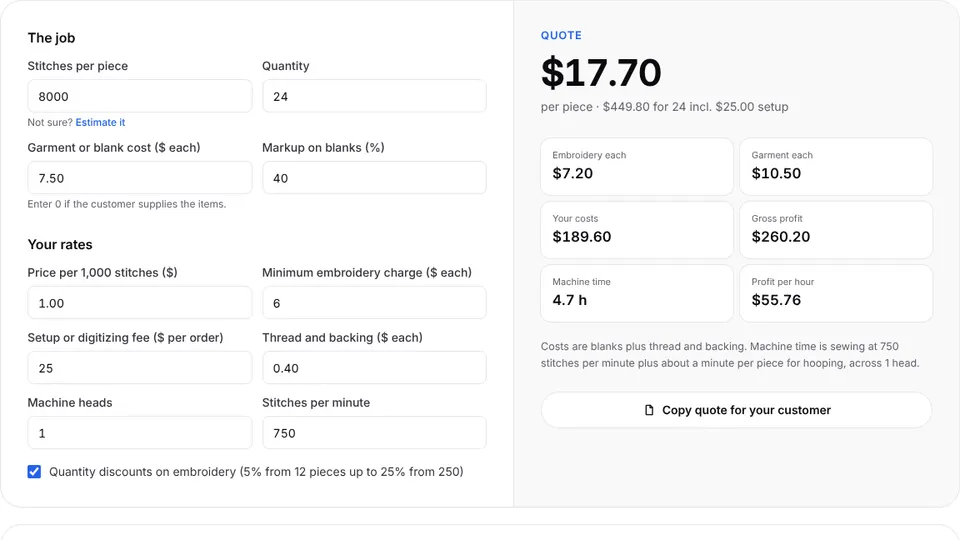
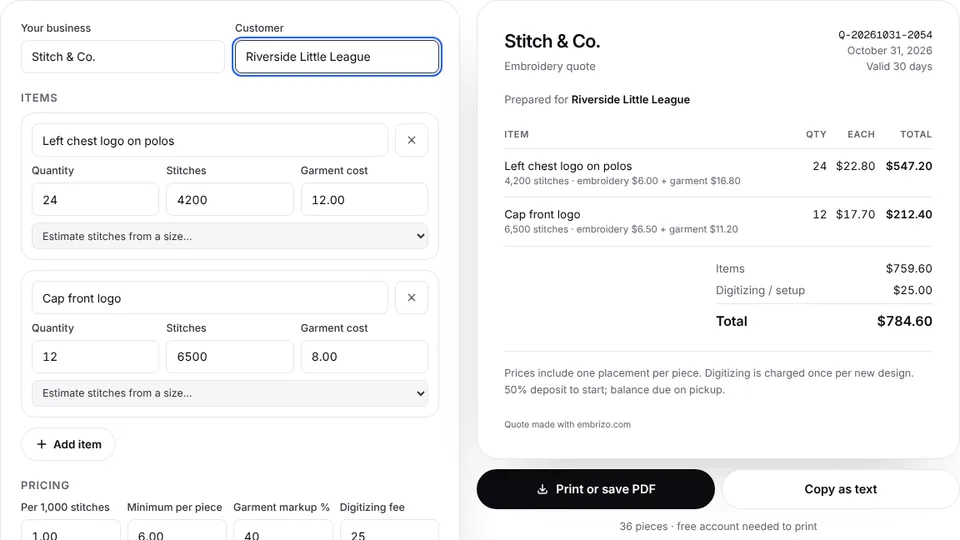
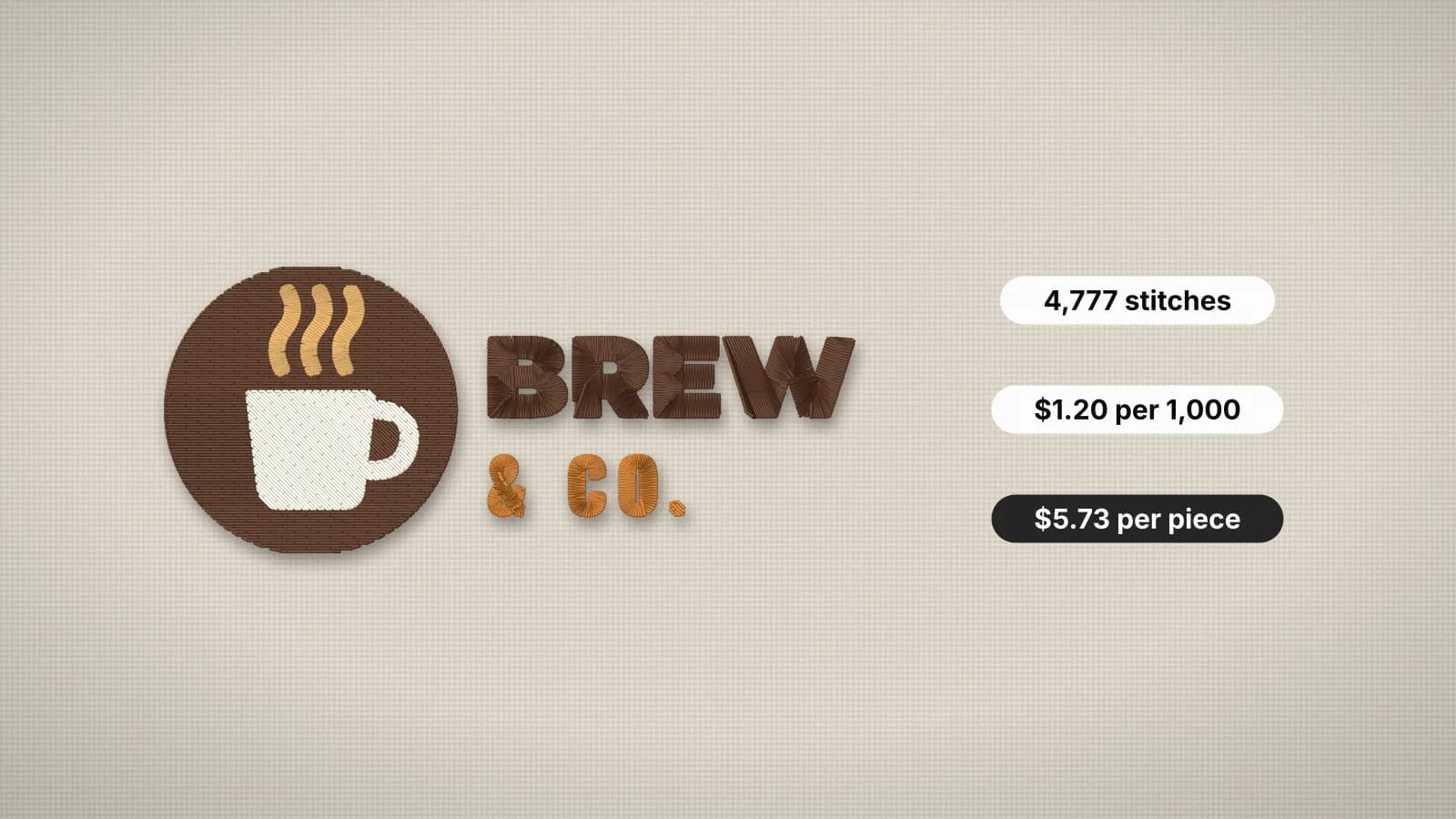
For stitch-heavy pieces, work out the stitching from the stitch count with the embroidery pricing calculator. For team, school or staff orders, send a printable quote from the embroidery quote generator with the items, garments, any setup fee and the total. How to price embroidery explains rates per 1,000 stitches, minimums and quantity breaks.
What turnaround should you set, and how do you handle the Christmas rush?
Set a processing time you can keep in your busiest week, not your quietest, such as 3–5 business days for name items, with a few more days in December. Work it out from machine time: a cuff name of about 3,000 stitches sews in about 4–5 minutes at 700 stitches a minute, and with hooping, trimming and checking that's about 10 minutes a stocking, or about six an hour on one single-needle machine.
Christmas stockings are the biggest wave for most name shops, and orders bunch into a few weeks from mid-November to early December. Plan the season like this:
| When | What to do |
|---|---|
| September to October | Order blanks with spares, photograph samples and set up listings |
| Early November | Have everything listed, and post your last order date |
| Mid-November to early December | Peak orders: send proofs the same day, batch every day and keep the processing time honest |
| Your last order date | Count back from your carrier's holiday send-by date, minus your processing time and two spare days |
| After the cut-off | Local pickup, ready-made stock or gift certificates only |
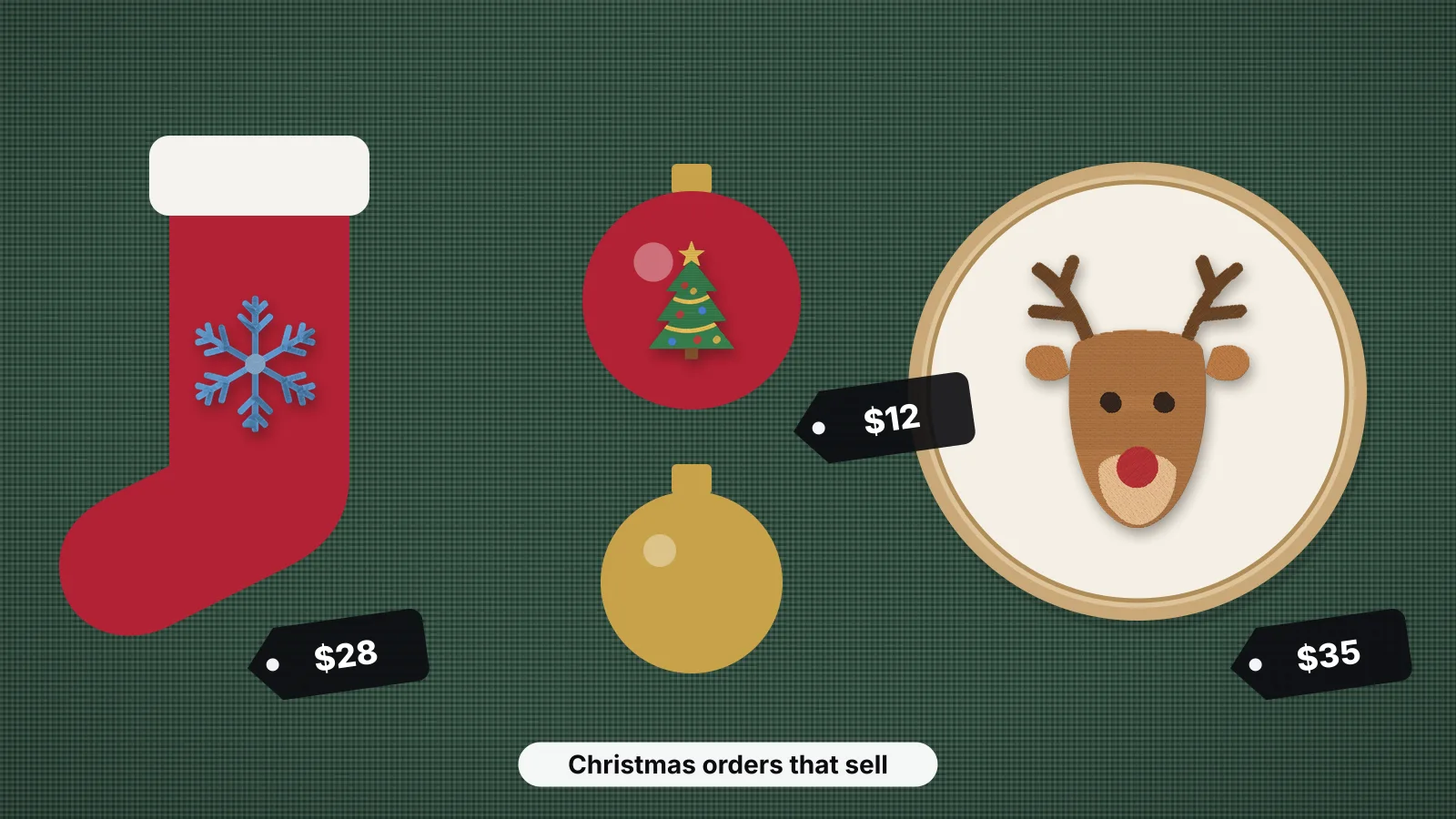
Close custom orders when the calendar is nearly full, not when it's full, and keep a day or two for remakes. Christmas embroidery to sell has the 2026 carrier dates and a worked last order date.
How do you handle mistakes and returns on personalized items?
Write the policy before the first order: personalized items can't be returned or exchanged for a change of mind, but anything wrong because of you is remade or refunded. Put it on every listing and in your shop policies; Etsy lets each seller set their own return and exchange policy, and many personalized shops exclude custom items from returns. Then decide who pays for what:
| What went wrong | Who pays | What to do |
|---|---|---|
| You misspelled the name, or used the wrong font or color | You | Apologize, remake it at once at your cost and ship it fast |
| The buyer typed it wrong, or approved a proof with the error | The buyer | Offer a remake at a discount, such as the cost of the blank and postage; the approved proof is your record |
| A thread break, pucker or flaw in the blank | You | Catch it before packing and remake it |
| Lost or damaged in the post | Check your carrier's cover and the platform's rules | Ship with tracking, file a claim and remake if the date matters |
| The buyer changed their mind | The buyer | Not returnable, as the listing says; a goodwill discount on a new order keeps the customer |
- The law still applies. In the EU and UK, the 14-day right to cancel an online order doesn't cover goods made to the buyer's specifications or clearly personalized, but faulty or misdescribed goods are covered either way. Check the rules where your buyers live.
- Keep spare blanks of each best seller for remakes, especially in December.
- Remake rather than unpick on velvet, minky and towels, where needle holes and crushed pile show.
- Keep the messages. The order, the proof and the written approval settle most disputes on any platform.
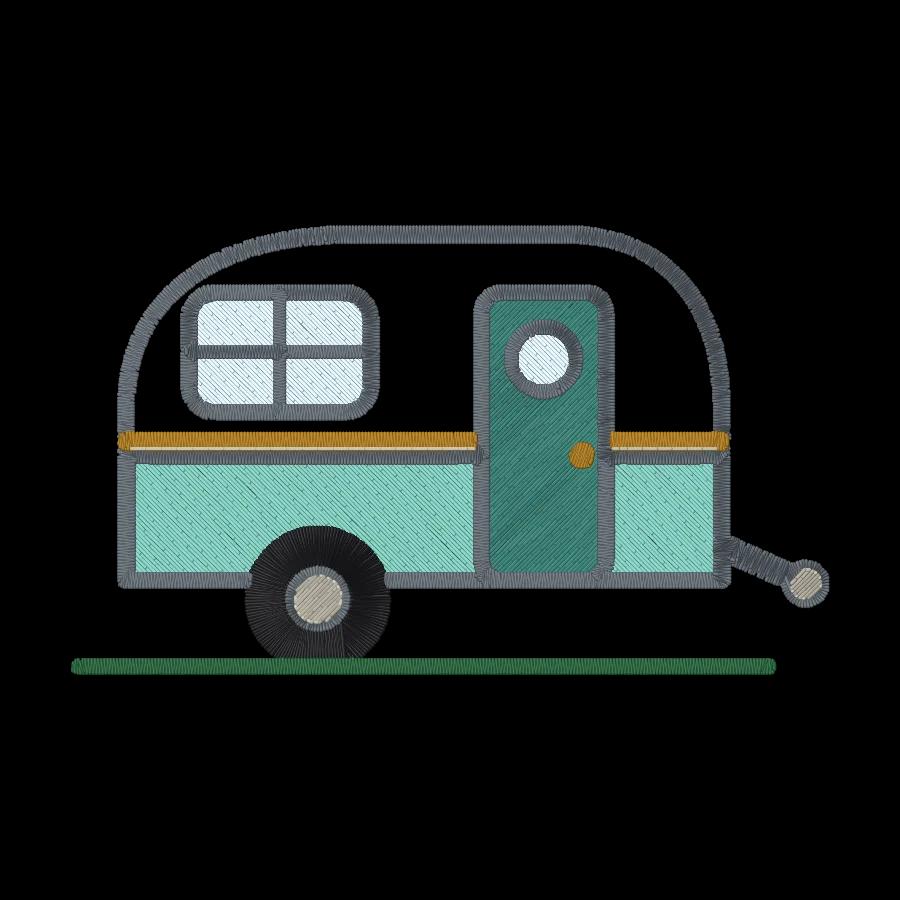
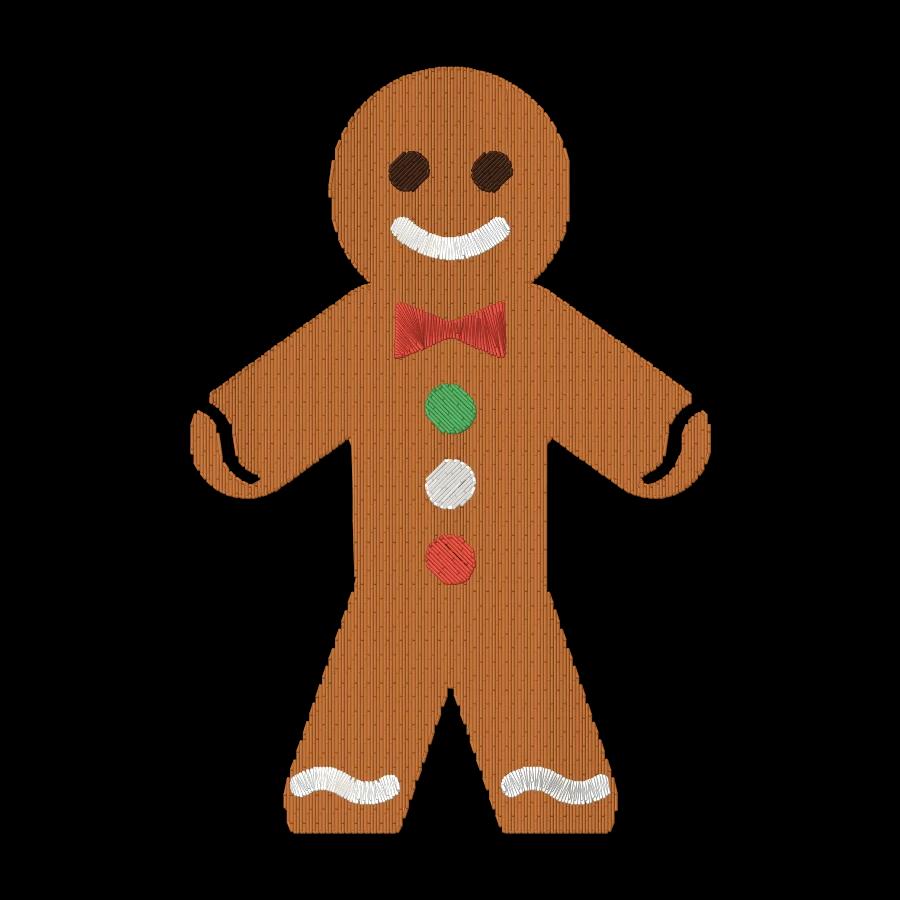
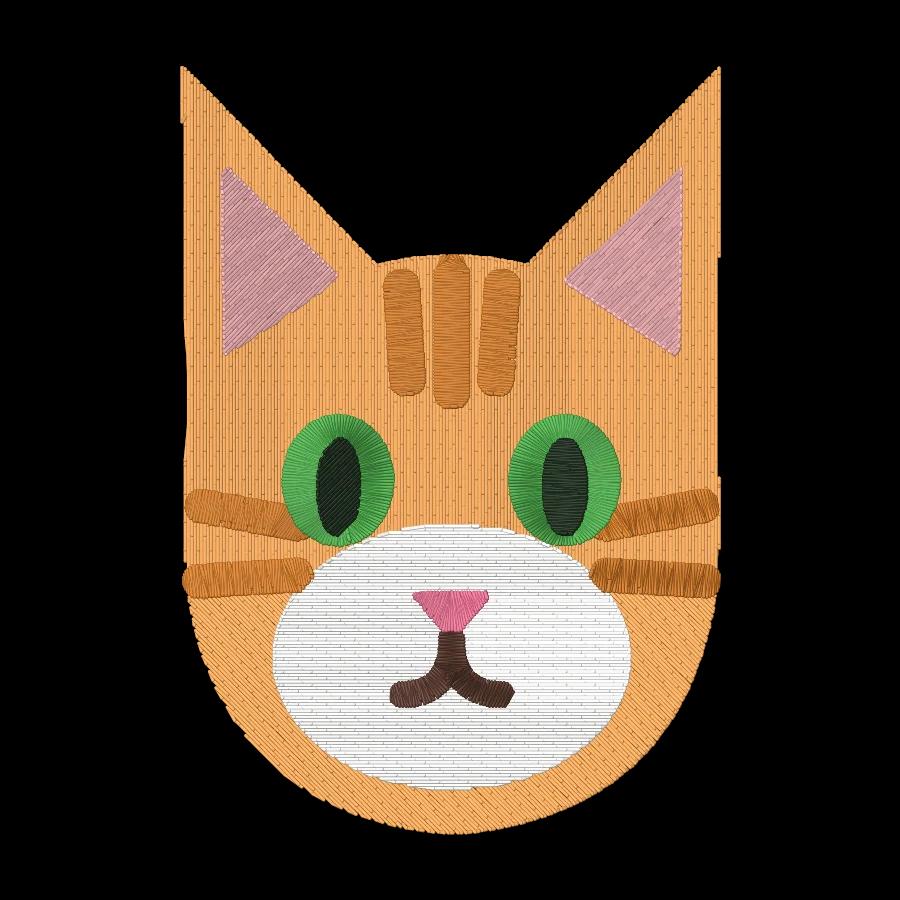
Practice on a free design
167 ready-to-sew designs in every machine format, free with an account.
How do you photograph personalized embroidery for listings?
Photograph real stitched samples with a common name, in soft daylight, so buyers see the font, the size and the thread color of what will arrive. For each listing, plan these shots:
- The main photo: the item with a short, common name such as Emma or Jack, straight on, on a plain background.
- A close-up at an angle, so the stitch texture shows.
- Scale: the stocking on a mantel, the tote on a shoulder, the cap on a head, or a ruler beside the name.
- The menus: one numbered font chart and one numbered thread chart, stitched rather than typed if you can.
- A long name and a short one on the same item, so buyers see how the size changes.
- Your last order date on the first photo in the Christmas season.
For options you haven't stitched yet, such as a new font or blank color, a mockup works as a later photo if it looks like what you'll really make. Label it as a preview and keep real photos first.